
Why Companies Struggle To Find the Right Talent (And What To Fix First)

When a search stalls (or fails), the instinct for many hiring companies is to blame the job market. Strong candidates must be scarce, and competition must be unusually high. Right?
Maybe in some cases.
But most of the time, the issue comes back to hidden mistakes that were there from the start.
These are the three main issues our recruiters see when a company can’t seem to find the right fit for their role (and what to do instead).
1. The role’s scope keeps evolving, even after the search is already underway.
At the outset of a talent search, most leadership teams have a strong sense of what they need. The role reflects a gap in the business, but the specific definition and details tend to shift once conversations begin.
Maybe additional stakeholders get involved and bring valid but different perspectives. Maybe the role responsibilities expand as the team talks through priorities, or the scope adjusts as new information comes to light.
All of this is reasonable. It’s part of thinking through an important hire.
But from the candidate’s vantage point, it can feel unsettling. For them, it looks like the role is described slightly differently from one conversation to the next or that decision makers are not aligned. That uncertainty can create hesitation and slow momentum.
When too many voices are introduced along the way, it often leads to changes in the job description, added opinions and delays in decision-making. That can make a candidate question how stable the role really is.
Limiting the number of people involved early and aligning on the role before the search starts helps keep the process steady. When the process stays consistent, candidates are more likely to stay engaged through a final decision.
2. Lack of clarity introduces risk for candidates.
Even when the role itself is well-designed, a lack of communication can create hesitation. Experienced candidates expect a certain level of complexity during the hiring process. What they’re looking for is clarity within that complexity.
Candidates are paying attention to things that often feel small on the company side but carry significant weight for them. If it’s vague what success looks like, unclear who’s making the decisions or if different people are saying different things throughout the process, that becomes a red flag.
They’re also watching how the process runs. If interviews are hard to schedule, if feedback is slow or if the process drags out, that can send concerning signals. A messy interview process can make a candidate think the internal culture may be just as disorganized.
When things are unclear or the process feels inconsistent, a candidate’s decision becomes harder to make. When the process is clearly laid out, when they understand who they’ll be working with, ow decisions are made, and what success looks like, they’re able to assess the role without trying to fill in gaps on their own.
3. Compensation expectations don’t match the market.
Most organizations don’t go into a search guessing about compensation. There’s usually some kind of reference point, especially when the role already existed. Often, the plan is to replace the role at or near what the previous person was making.
The challenge is that the current job market may not reflect that number.
That person may have left to go make more money. Or the market may have shifted since that role was last filled. What worked before may not line up with what candidates expect now.
This usually becomes clear after the process is already in motion. Candidates move through interviews, the role looks strong and then compensation comes into focus. At that point:
- Candidates may decline to move forward
- Offers are turned down
- Conversations shift into back-and-forth
Compensation also extends beyond base salary. Candidates are looking at the full package. That includes flexibility, incentives and how the role is structured over time. Those details aren’t always defined early, which leaves room for interpretation.
Before the search begins, look at what the market is paying for the role. Decide what you are prepared to offer and be clear on the full package (not just base salary) early in the process.
When compensation is aligned early, the process moves forward without having to reset expectations later.
Set Up Your Next Hiring Process Well
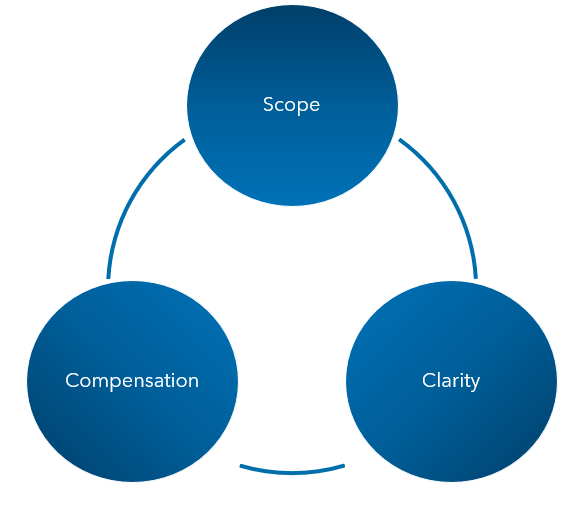
When scope, communication and compensation are misaligned, the search becomes harder than it needs to be.
Before the next search starts, it’s worth taking the time to lock in how the role is defined, how the process will run and what you’re prepared to offer. That up-front clarity carries a great benefit through the entire process because it keeps candidates engaged, keeps decisions moving and gives the search a better chance of holding together from the first conversation through the offer.
To learn more about how to find the right talent for your company, contact your Warren Averett advisor directly, or ask a member of Warren Averett Executive Search & Recruiting to reach out to you.
