
Building Trust in a Church or Nonprofit: Closing Three Common Internal Control Gaps

Staff turnover, limited budgets and time-consuming documentation are just some of the common elements working against nonprofits of every flavor. Whether you’re a church or a library, your organization can neither survive nor thrive unless the community trusts both your mission and your execution.
Establishing confidence starts with closing gaps through better internal controls. Here, we’ll look at how to improve oversight, implement better spending controls and reduce overreliance on institutional knowledge. With just a few practical measures, you can revamp your organization so there are fewer questions and more people moving in the same direction.
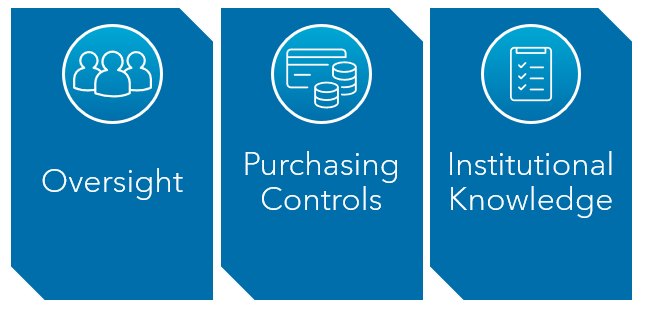
Gap #1: Unlimited Access, Limited Oversight
Large nonprofits often work with volunteers who give what they can, when they can. In theory, volunteers are properly divided and assigned relevant tasks. In practice, individuals are often given broad access to everything from banking platforms to QuickBooks to payroll systems.
Small nonprofits face the opposite problem: there may only be one person making, approving and documenting every transaction. In either case, financial reviews are often convoluted or nonexistent.
Closing the gap starts with structuring access:
- Grant access based on responsibilities.
- Remove users as soon as they’ve left the organization.
- Review access at least once per year.
The more eyes you have on your finances, the less likely you are to have unauthorized changes, errors or even outright fraud. To further boost transparency, consider internal or external reviews of your bank reconciliations, ledger entries, statements, or payroll registers, and formally document reviews, such as requiring two signatures on every payroll record.
Ideally, you’ll separate duties, including financial authorization and reconciliation, so there are fewer conflicts of interest. If you’re dealing with limited staff, consider outsourcing financial tasks or reviews.
Gap #2: Lax Purchasing Controls
If you’ve ever approved a request with a verbal “yes,” only to forget about it later, you probably have an idea of how purchasing controls can go awry. Whether it’s an Amazon purchase from a personal account, a lost debit card or a misplaced zero, there’s a lot of room for error. These issues can lead to difficult questions from the board or community.
Having clear purchasing thresholds helps define when additional review is required. For example, a department manager may be able to approve purchases up to a certain amount, while larger expenditures require approval from a director or executive. Financial expectations add another layer of oversight by setting documentation requirements based on the size of the purchase. A small purchase may only require basic support, while a larger project may require multiple quotes before approval.
Card controls help strengthen accountability after the purchase is made. Itemized receipts, monthly statement reviews, and reviews by someone not involved in the transaction make it easier to identify unusual activity and address issues before they become larger problems. Together, these controls create a consistent process for spending decisions and reduce opportunities for unauthorized or inappropriate purchases.
If you use major e-tailers, like Amazon, review the access controls to each account and implement approval workflows. Match purchases and review the order history at least once per quarter. If you have multiple people using multiple individual accounts, it may be time to centralize into one.
Gap #3: Critical Processes Live in Employees’ Heads
Institutional knowledge is priceless, born from years of experience and dedication. However, if that’s all you have, it won’t take long before cracks show. A manager may only need to be out for a day or two before real damage is done.
When procedures are passed down verbally, details get lost fast. Instead, list the most critical tasks of your organization, so they can be documented in clear, easy-to-follow steps. Where are receipts stored? How are they reconciled? Who does payroll work? Who is responsible for going over the financial records and when?
Keep all critical process documents, such as sign-offs, vendor contacts and onboarding information, in easily accessible places. Whether it’s an auditor or new employee, everyone should be able to see how critical processes work (even if they don’t have the authority to access sensitive information).
Checklists can help ensure that you don’t miss anything. A setup or processing checklist can help keep everything in order. Consider simplifying the list as much as possible so time-strapped volunteers feel galvanized to tick the items off.
The easiest way to approach this step is to consider what people need to know most and then build from the top down. Doing so improves consistency and accountability and reduces the odds of a missed step.
Learn More About Internal Controls for Churches and Nonprofits
Churches and nonprofits may always deal with a certain level of staffing limits because of the nature of the organization. However, making a few small changes can be enough to give you more oversight, which can strengthen trust on every level. The better your internal controls, the fewer misunderstandings you’ll have and the more resilient your organization will be against the inevitable twists and turns.
To learn more about how to enhance your organization’s efficiency and protection through internal controls, contact your Warren Averett advisor directly, or ask a member of our team to reach out to you.
