
Business Continuity Consulting: FAQs

All companies are at risk of experiencing a disruptive event, but few companies are adequately prepared to weather one.
Business continuity consulting services can help position an organization to respond confidently in a crisis by establishing a framework that protects your workers, data and other assets. But if you don’t already have a disaster recovery plan and a trusted provider, it can be challenging to know where to begin.
Here, we outline a few FAQs about business continuity consulting that can help your company get started.
Why Not Manage Business Continuity In-House?
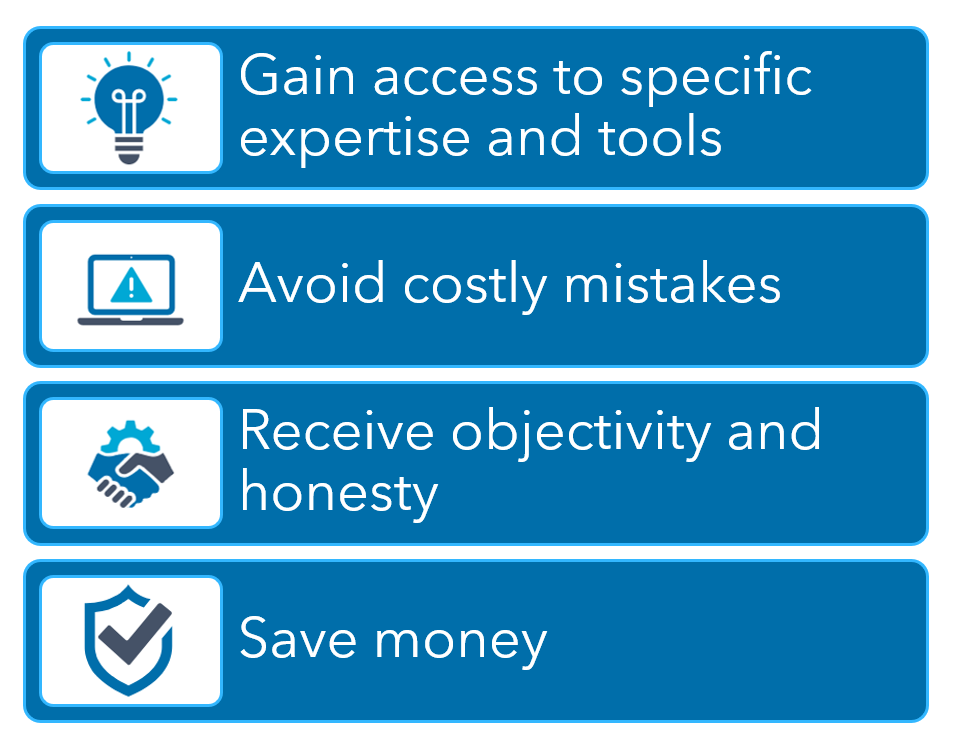
While managing your business continuity in-house may seem like a logical choice, most companies don’t have the hyper-specific expertise an effective plan calls for, and a poorly planned or implemented business continuity strategy can result in costly missteps.
Outsourcing your business continuity is an alternative that can afford you peace of mind when an unplanned disruption occurs.
In the business continuity consulting process, an experienced advisor will provide the much-needed objectivity and fresh perspective that may be difficult to achieve from someone within the company. An honest and critical assessment of the capabilities of your current resources and plans is the best way to ensure that your company has the contingencies in place to be fully prepared for a disruptive event.
Using outside business continuity consulting services also means that your company will have access to specialized expertise and tools, including IT infrastructure and resources that can safeguard your company’s data and applications.
Plus, having your business continuity managed by a provider can actually be more cost-effective and make more business sense than managing it in-house. Because your provider has the expertise, you can save on the costs associated with looking for and hiring in-house talent.
What Happens During the Business Continuity Consulting Process?
You can expect an experienced business continuity consultant to provide a well-structured process that enables efficiency and easy scalability. The process will vary depending on your specific situation, but you can generally expect the following steps in the business continuity consulting process.
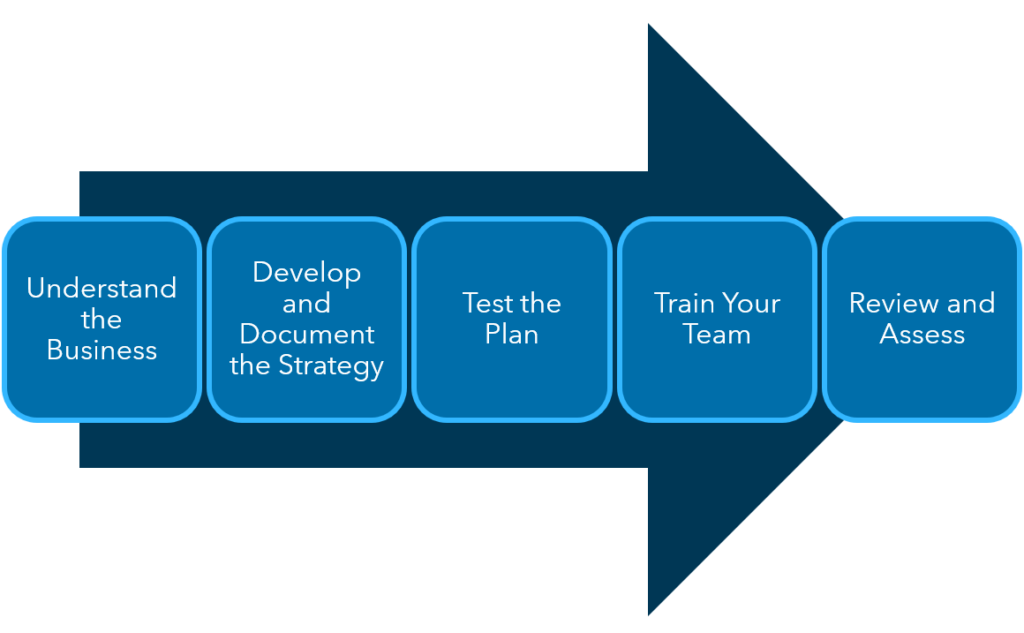
Understand Your Business and Project Scope
The business continuity consulting process begins with in-depth assessments of your company to analyze your unique operations, your specific risks and those risks’ potential impacts.
Beginning with a thorough analysis of your current situation allows your advisor to make the most relevant recommendations to you, and it sets both parties up to identify the project’s scope and shape your business continuity objectives successfully.
Develop and Document Strategy
After initial assessments are completed, your business continuity consultant will create a customized strategy that incorporates safeguards and procedures for reducing the identified risks and restoring critical business capabilities.
The business continuity plan will be officially documented and will include information like how to recover systems or execute certain processes manually.
Test Your Business Continuity Plan
Your business continuity plan also should undergo thorough testing against different scenarios to identify potential vulnerabilities. Proper testing allows your consultant to identify gaps in your business continuity plan and gauge how well your company is prepared for an emergency. Then, you’ll be able to make needed adjustments and improvements as a result.
Train Your Team Members
Training is necessary for familiarizing your team members with the details and processes of the plan. Your consultant can help you implement the educational programs that will ensure everyone understands the business continuity plan and what is expected of them. This helps to eliminate confusion and uncertainty when a disaster occurs.
Review and Adjust Periodically
The business continuity consulting process doesn’t end when your plan is finished.
Because companies are always evolving, your business continuity plan should undergo regular reviews to account for any changes in your organization and should be updated to address new scenarios. All relevant parties should be notified of any changes to the plan, and the updated plan should be stored securely.
How Do You Know if You Really Need a Business Continuity Consultant?
There are many red flags that can indicate that your company could benefit from business continuity consulting services.
- Some companies are charged with industry regulations that place specific requirements on their data and their business continuity plans.
- Companies that have a complex organizational structure may find it difficult to properly align various components to efficiently plan for the unexpected.
- Companies that are located in areas prone to frequent natural disasters (like hurricanes or wildfires) may desire expert help for planning.
- Organizations that are dependent on highly connected technology infrastructures can add another layer of complexity that would require an experienced business continuity consultant.
- Even the simple desire for more peace of mind and protection is justification enough to seek out business continuity consulting
How Should You Vet a Business Continuity Consulting Service Provider?
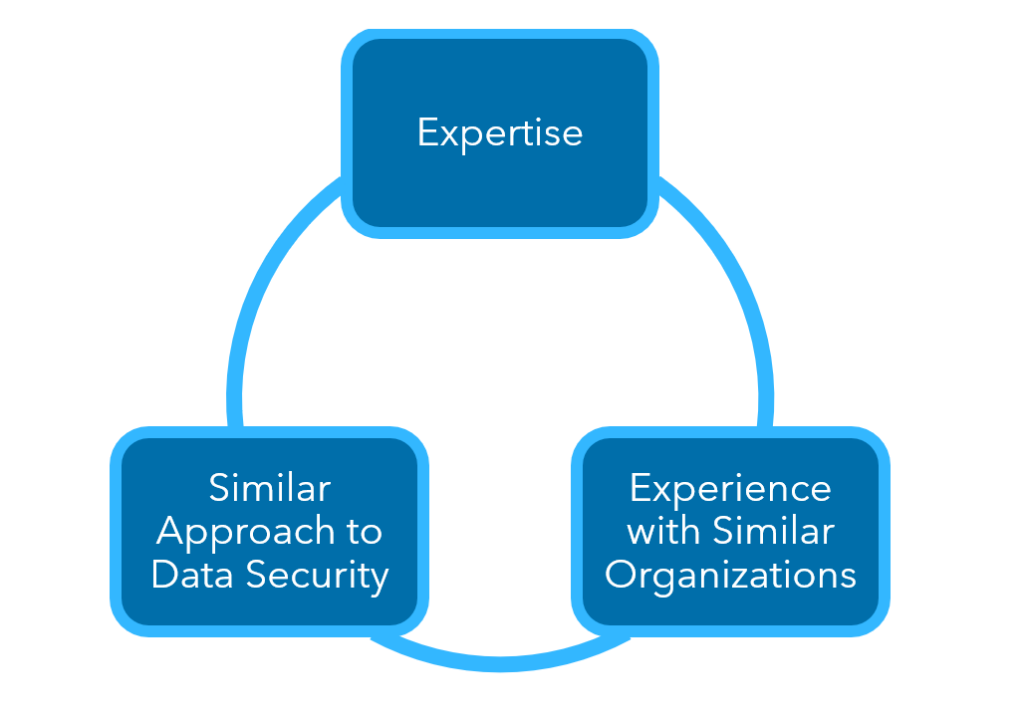
When choosing a business continuity consulting service provider, you want to be certain that the consultant is the best match for your company.
Confirm that they have proven expertise, that they serve other organizations similar to yours (especially in terms of industry, size, IT infrastructure and continuity goals) and that they align with your approach to data security.
How Long Does the Business Continuity Consulting Process Take?
The timeline for completing the business continuity consulting process can vary. Your ultimate goal is to make sure that the plan that is developed is applicable to your particular company.
For example, a chemical plant based in a region prone to hurricanes may require more time to collect all the information needed for creating a plan than would a retail business located in another part of the country.
What Information Would a Business Need to Provide to a Consultant?
The information your consultant requests will vary depending on your unique circumstances. Generally, obtaining a comprehensive understanding of your company and creating a customized plan includes the following at a minimum:
- Business process documentation
- Staff list and contact information
- Critical assets (digital and physical)
- Vendor information
- IT infrastructure information
- Information about physical offices or operating spaces
Is Testing Typically Part of the Business Continuity Consulting Process?
Testing is essential for successful business continuity consulting. Repeated testing ensures that your business continuity infrastructure continues to be a cohesive part of your business that works properly and helps mitigates risks.
Get Prepared for the Unexpected With Professional Business Continuity Consulting Services
Your business can be disrupted in many different ways, from cybersecurity incidents to natural disasters. In order to minimize disruption and to make your company more resilient, investing in business continuity consulting can be a huge advantage.
Contact a Warren Averett Technology Group business continuity consultant today to begin planning.
