
Business Continuity vs. Disaster Recovery: What’s the Difference?

For a business to survive a disaster, having plans and processes in place beforehand is essential to ensure that you can continue to operate and recover quickly after a disruption. Therefore, every organization should prioritize business continuity and disaster recovery plans.
At first glance, these two terms can seem interchangeable or even redundant, but there are important differences that business leaders should understand when it comes to business continuity vs. disaster recovery plans.
Knowing about these two different kinds of plans and how to implement them can properly prepare business leaders for the challenges they may face when a disruptive event (such as natural disasters, cyberattacks, power outages, pandemics, labor disputes and equipment failures) occurs.
Here’s what you need to know about business continuity plans, disaster recovery plans and their similarities and differences.
Business Continuity vs. Disaster Recovery: Their Different Purposes
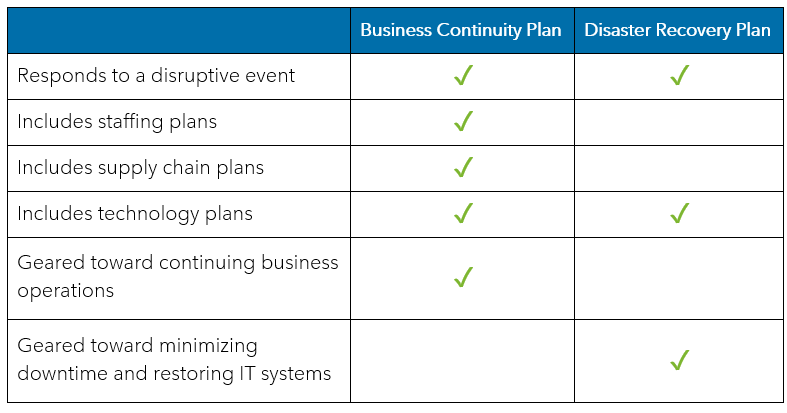
“Business continuity” refers to an organization’s ability to continue operations and maintain essential functions during and after a disruption.
Business continuity planning includes planning for operational procedures, staffing, communication and supply chain management. The goal of business continuity planning is to make certain that an organization can continue to function despite a disruption.
“Disaster recovery” refers specifically to the process of recovering and restoring an organization’s IT systems and data after a disruption. It involves creating and implementing a plan to recover critical systems and data, including backups and redundancies, so that the organization can resume operations as quickly as possible.
Disaster recovery planning is focused on minimizing downtime and ensuring that IT systems and data are restored as quickly as possible.
So what’s the difference between business continuity vs. disaster recovery?
Business continuity focuses on limiting downtime in the case of many different kinds of business disruptions, while disaster recovery focuses on restoring efficient IT system functionality after a serious disaster.
All business continuity plans should incorporate some aspects of disaster recovery plans. After all, in a disaster, businesses need to recover their IT systems to remain operational. But disaster recovery plans won’t cover the entire scope of planning and response that a full business continuity plan would.
Technology Considerations for Business Continuity and Disaster Recovery Plans
Technology considerations are a critical component of both disaster recovery and business continuity planning. Here are several considerations to keep in mind when it comes to your IT solutions:
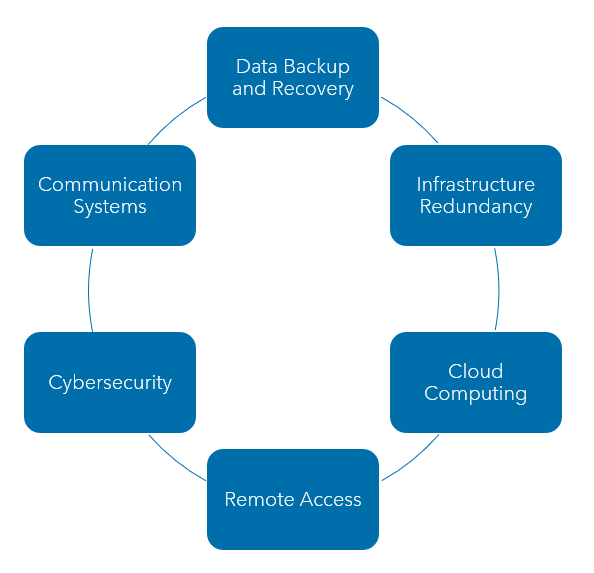
Data Backup and Recovery
Backing up critical data is essential to ensure that it can be restored in the event of a disaster. The backup system should be tested regularly to ensure that data can be recovered quickly and accurately.
Infrastructure Redundancy
To keep critical systems available during a disaster, you may need to implement redundant infrastructure, such as backup power systems, network connectivity and server hardware.
Cloud Computing
Cloud computing services can provide a high degree of resilience and availability during a disaster. You may consider using cloud-based backup and recovery solutions or moving critical systems and applications to the cloud.
Remote Access
In the event of a disaster, remote access solutions can enable employees to work from home or other locations. You may need to implement secure remote access solutions as part of your business continuity and/or disaster recovery plan to make sure employees have the necessary hardware and software to work remotely.
Cybersecurity
Disasters can create opportunities for cyberattacks, so it’s essential that cybersecurity measures are in place and up to date.
Communication Systems
Communication is critical during a disaster, so make sure that communication systems are available and reliable. This may include using redundant phone systems, email, instant messaging and other communication tools.
Testing Business Continuity and Disaster Recovery Plans
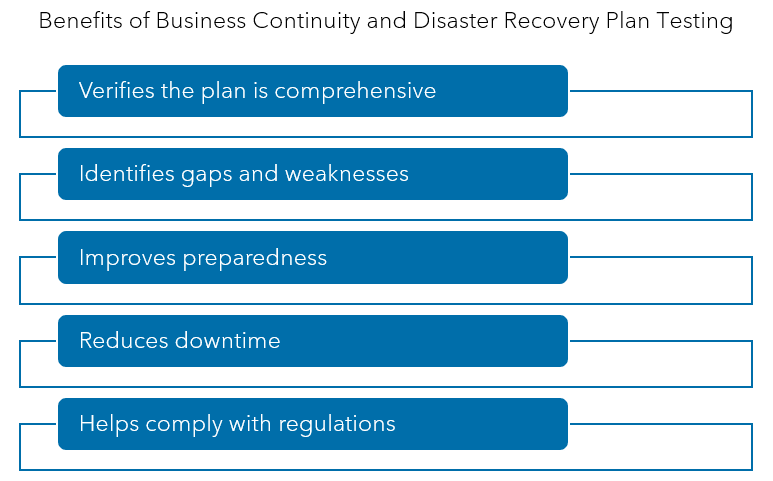
For both business continuity and disaster recovery plans, testing is essential to ensure that it will be effective in a real-world situation.
Testing helps verify that the business continuity or disaster recovery plan is comprehensive and covers all critical aspects of the organization’s operations. It provides an opportunity to identify any missing components or areas that need improvement.
By conducting tests, you can also discover areas where the plans may need improvement (such as incomplete or outdated procedures, missing resources or inadequate communication channels) and help improve the organization’s preparedness for a disaster. It provides an opportunity to practice and refine response procedures, evaluate the effectiveness of communication channels, and identify any additional resources or training requirements.
A well-tested plan can help reduce downtime and minimize the impact of a disaster on the organization. By identifying and addressing gaps and weaknesses in the plan, the organization can ensure a more rapid and effective response to a disaster.
It’s also important to note that several industries have regulations that require organizations to have a disaster recovery plan in place and to be tested regularly. Evaluating the plan is necessary to ensure compliance with these regulations and to avoid penalties or legal consequences.
Business Continuity vs. Disaster Recovery: Which Do I Need?
So, which one do you need: business continuity vs. disaster recovery?
Both business continuity and disaster recovery planning are necessary so you can continue to function during and after a disruption. However, the specific needs of your organization will determine which one is more important.
For example, an organization that relies heavily on technology may prioritize disaster recovery planning, while an organization that relies heavily on supply chain management may prioritize business continuity planning.
Learn More About Business Continuity vs. Disaster Recovery
When disaster strikes a small or medium-sized business, the organization’s future depends upon how prepared the company is for the disruption. The cliché that failing to plan is planning to fail seems to hold in business continuity and disaster recovery planning. Don’t wait for a disruption to occur.
If you want to learn more about business continuity vs. disaster recovery plans, or if you’re ready to create or adapt these plans for your organization, connect with your Warren Averett Technology Group advisor directly, or ask a member of our team to reach out to you to get the conversation started.
