ESG Reporting: FAQs about Getting Your Company Started

Would you choose to do business with an organization that isn’t ethically sound? Would you partner with a vendor that can’t keep your data safe? Would you support a company that didn’t manage (or even understand) its own risk?
Your answer is probably a strong “no”—and for obvious reasons.
Your business wants to work with sound vendors who manage their risk well and promote productive values. You want to be sure you’re partnering with companies that share your perspectives on important issues like compliance, sustainability, ethics and cybersecurity.
And your customers feel the same way about their relationship with your organization.
This is the essence of environmental, social and governance (ESG) reporting.
What Is ESG Reporting?
ESG reporting, also referred to as sustainability reporting, involves disclosing a company’s important performance metrics that apply to nonfinancial assessments, specifically pertaining to environmental, social and governance performance.
This involves making company activities public in these areas and being held accountable by consumers and investors regarding ESG-related issues.
Environmental
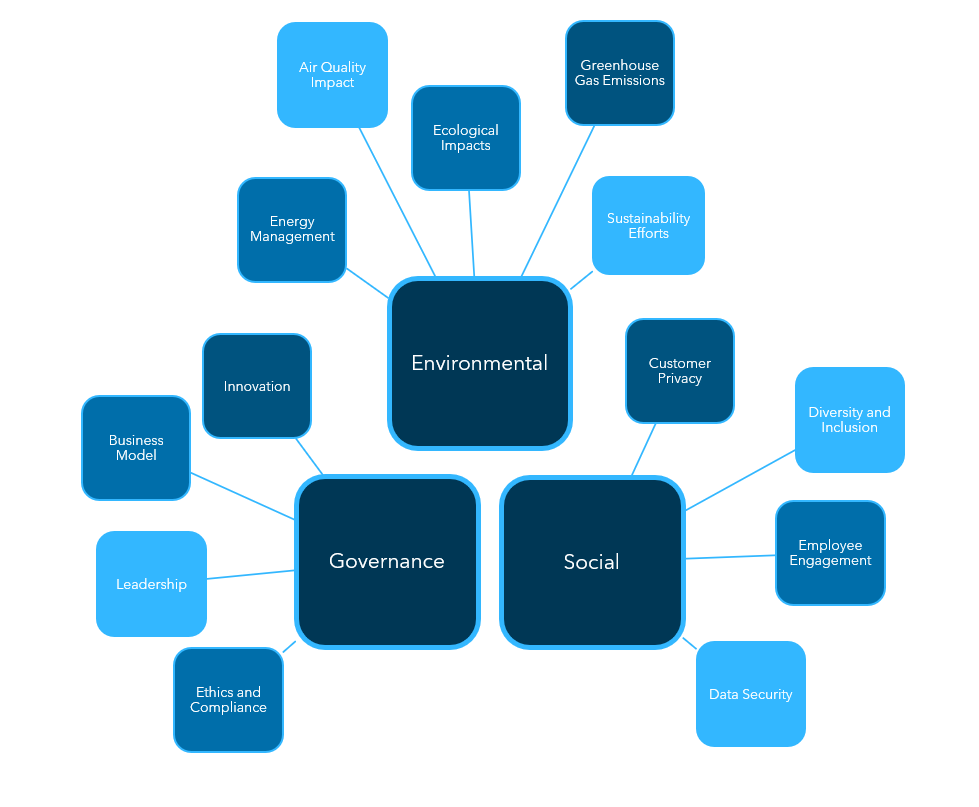
Environmental considerations within ESG reporting would include your organization’s greenhouse gas emissions, your energy management, your ecological impacts and your overall sustainability efforts.
Social
Social considerations would include your practices pertaining to data security, customer privacy, product quality, human capital, employee engagement, diversity and inclusion, as well as company culture.
Governance
Governance considerations would include your business model, innovation practices, organizational leadership, and your company’s overall approach to conducting business from an ethical, risk, legal and regulatory perspective.
Who conducts ESG Reporting?
While there are currently no formal regulations for who produces a company’s ESG report, using an independent auditor can add valuable credibility to your ESG reporting. Similar to an audit of financial statements, having a third party provide assurance that your ESG reporting is accurate can significantly enhance its credibility.
What are ESG Reporting Requirements?
While ESG reporting has been voluntary for many years, more and more jurisdictions have been introducing or expanding ESG reporting requirements. Some of the most prevalent requirements that companies should be aware of include:
United States Securities and Exchange Commission (SEC) Climate Disclosure
The SEC’s climate disclosure was released earlier in 2024, but it is currently involuntarily stayed pending a judicial review, which is designed to determine its necessity into the future. At some point, this reporting will be required for public companies.
CSRDs
The European Union’s Corporate Sustainability, Reporting Directive (CSRD), expands the scope of nonfinancial reporting for both public and private European entities. The CSRD can also apply to non-European entities that have a European influence, such as organizations with a parent company that’s in the European Union or companies that meet certain thresholds.
California – Climate Corporate Data Accountability Act (SB253)
The Climate Corporate Data Accountability Act, when implemented, will require businesses with more than a billion dollars in revenue that do business in California to report on their greenhouse gas emissions annually through a third party.
California – The Climate-Related Financial Risk Act (SB261)
The Climate-Related Financial Risk Act SB261, when implemented, will require biannual reporting of climate-related financial risk for organizations with annual revenue exceeding $500 million.
California – Voluntary Carbon Market Disclosures Act (Pending State Legislation AB1305)
The Voluntary Carbon Market Disclosure Act, if passed, would require businesses to disclose activities from a carbon offset perspective.
A Note about ESG and Supply Chains
Even if your company doesn’t meet the formally defined requirements for reporting, you may still have ESG reporting obligations. You may roll up into another organization, or you may be a supplier to an organization that meets the requirements. Your relationship to other organizations may obligate you to provide ESG information so that those entities can report on their entire supply chain.
What are the Benefits of ESG Reporting?
While ESG reporting may not be mandatory for some businesses, particularly small and medium-sized enterprises, there are many compelling reasons why a company would still choose to issue these reports.
Mitigating Risk
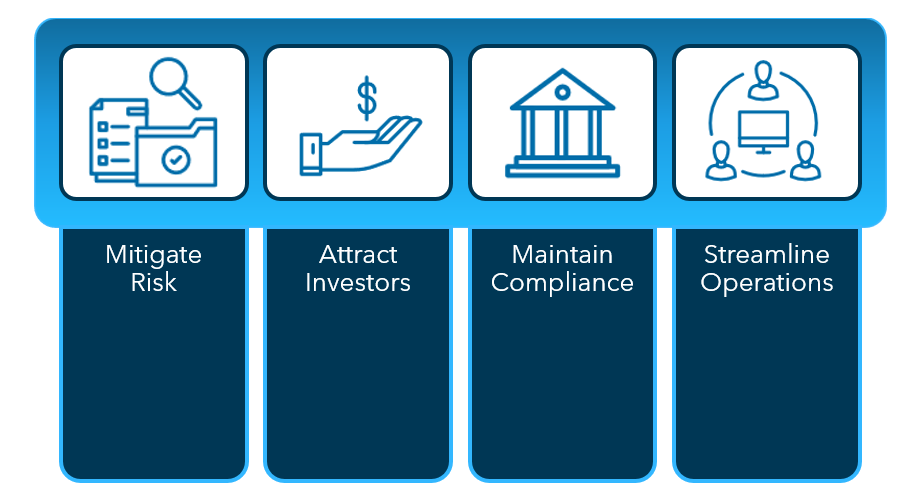
When you account for ESG activities in your organization, you’re employing a long-term focus concerning your operations. This attention to detail can uncover risks that can significantly impact your operations down the line. During this process of uncovering potential hazards, you’ll be better able to assess the ability of your organization to respond to these risks and develop strategies to effectively mitigate obstacles.
Attracting Investors
Investors today use ESG reports to screen investment opportunities. As a result, organizations that lag behind in these areas are at risk of being ignored by the investment community in favor of organizations that take a proactive approach to ESG reporting.
Maintaining Compliance
Being aware of ESG regulations, and even potential upcoming changes to regulations, can help your company avoid fees and other negative impacts related to noncompliance. Getting started in ESG reporting will help you get up to speed with compliance issues that are bound to become more important to your company as the future unfolds.
Streamlining Operations
Engaging in ESG reporting often takes a great deal of time and effort. The process often leads to new discoveries concerning a company, its systems and its operations. The insights gained can help identify valuable opportunities to make your organization more efficient and streamline your operations.
Where should an organization start with ESG reporting?
Selecting a framework is the best first step because it will provide your organization with clear objectives for your ESG reporting. However, with hundreds of framework options to choose from, selection can be challenging in itself, and different frameworks focus on different aspects of ESG.
Consider which frameworks will be the best for your organization, and ask your customers which framework they are most interested in. You may even find it beneficial to follow multiple frameworks.
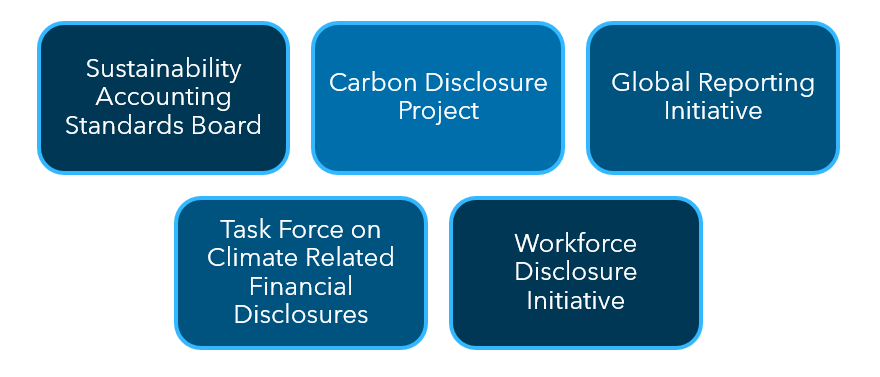
A few of the most popular frameworks are the Sustainability Accounting Standards Board, the Carbon Disclosure Project, the Global Reporting Initiative, the Task Force on Climate Related Financial Disclosures and the Workforce Disclosure Initiative.
Sustainability Accounting Standards Board (SASB)
Many organizations with larger reporting requirements start with the SASB framework. SASB is a popular framework because it’s largely based on industry-specific standards and considers which metrics are most material and most important for specific types of companies.
The Carbon Disclosure Project
The Carbon Disclosure Project, which is followed by about 8,400 companies worldwide, is focused on sustainability, environmental boundaries and climate change as it relates to your business.
Global Reporting Initiative (GRI)
GRI is a framework mostly used by public companies on the S&P 500. GRI aligns with the Ceres Principles for responsible environmental conduct, which is rooted in the Valdez Principles—the 12 principles that Exxon Valdez formulated after its oil spill in 1989.
The Task Force on Climate Related Financial Disclosures (TCFD)
TCFD is another popular framework, which was established by the G20 in 2015. The TCFD is used by the SEC for many of its disclosures.
Workforce Disclosure Initiative
The Workforce Disclosure Initiative is largely focused on the social aspects at play within an organization’s workforce management.
The Future of ESG Reporting
As new opportunities arise and risks become more widespread, businesses must emphasize the importance of ESG reporting to secure funding, improve business practices and positively contribute to the changing business landscape.
Public companies already face more stringent requirements regarding ESG reporting. But, given the benefits that it provides to all stakeholders, it’s just a matter of time before it becomes part of normal business practices for everyone.
If you are looking for added authority for your ESG reports or need advice on setting up an ESG reporting line for your business, contact your Warren Averett advisor or ask a member of our team to reach out to you.
This article was originally published on March 19, 2021 and most recently updated on September 17, 2024.