
How Does Your Construction Company Stack Up? (A Practical Guide To Benchmarking)

How does your construction company stack up to other construction companies?
Construction is one of the few industries with access to truly robust, organized data. That means you don’t have to guess where you stand; you can actually see it.
But benchmarking isn’t just about looking at broad industry averages. When it’s done well, you can track trends in your own performance over time and measure them against similar companies—whether by geography, specialty, trade or business model.
An approach like this does much more than show how your company stacks up. It allows you to make sound decisions, identify opportunities for improvement and plan your next steps with clarity.
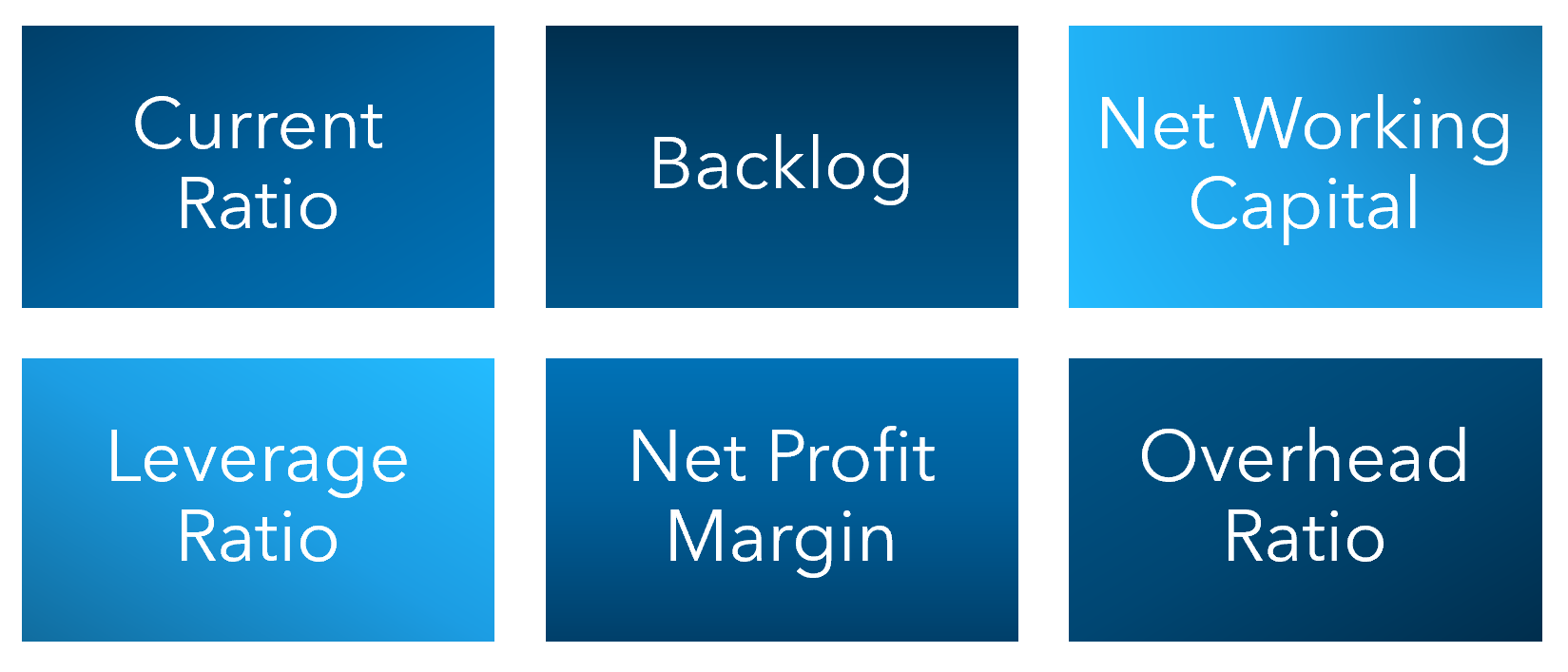
So, what should you be looking at when you benchmark your construction business? Here are the essentials, explained in plain language.
1. Current Ratio
Cash flow is critical in construction. Your current ratio (current assets divided by current liabilities) shows whether you have enough short-term resources to cover immediate obligations like bills, payroll and materials.
Construction projects often require a significant investment up front, so a low current ratio can signal trouble paying vendors or staff if a project stalls. On the other hand, if your current ratio is too high, it may be a sign that you could be missing chances to reinvest or grow.
Comparing your current ratio to similar contractors can draw attention to potential risks, demonstrate financial transparency and help you see if you’re managing cash as well as your peers.
2. Backlog
Backlog is your pipeline: the value of contracted work you haven’t completed yet.
Knowing your months of backlog helps you forecast your revenue and allocate your resources. A healthy backlog means steady activity and fewer surprises.
Reviewing your backlog can help with planning for cash flow, spotting bottlenecks and comparing your workload to others in your specialty or region. It’s a practical way to gauge your market position.
3. Net Working Capital
Net working capital (current assets minus current liabilities) shows whether you have the financial flexibility to keep projects moving and handle the unexpected. In construction, where up-front costs are high and payments can lag, this metric is a real-world indicator of your ability to weather slow periods or take on new work.
Benchmarking against other construction companies’ net working capital helps you see if you’re carrying too much risk or have room to invest more aggressively. It’s a key measure of stability.
4. Debt-To-Equity (Leverage) Ratios
How you finance your business matters. The leverage ratio (debt-to-equity) reveals how much risk you’re taking on to fund projects and operations. A higher ratio than your peers might mean you’re growing quickly but also taking on more risk. A lower ratio could mean that you’re missing opportunities.
Comparing your leverage to other contractors gives you a clearer picture of your risk profile and provides clarity about your borrowing and investing.
5. Net Profit Margin
Net profit margin measures how much profit you keep from every dollar of revenue after all costs. In construction, costs can swing and surprises can happen quickly, so your net profit is a good way to practically measure your business’s health.
If your margin lags behind similar companies, it’s a cue to review costs, pricing and project selection. If your margin is strong, you’re operating efficiently and making the most of your opportunities.
6. Overhead Ratio
Overhead ratio measures indirect costs (like office expenses, insurance and admin salaries) as a percentage of your top-line revenue. High overhead can undermine your profits, while a lean ratio means more revenue stays in your pocket.
Benchmarking your overhead ratio against similar contractors helps you see where you could improve operations, cut unnecessary costs or implement tools that improve efficiency.
Why Benchmarking Matters in Construction (And How To Use It)
Benchmarking isn’t just about collecting numbers. It’s about turning those numbers into better decisions for your construction company. Once you’ve gathered your key metrics and compared them to industry standards, the real value comes from what you do next.
Start by looking for areas where your numbers stand out, either above or below the typical range for your trade, region or specialty. Then, use these insights to set practical goals for your business. Maybe you want to improve your net profit margin by reducing project overruns or strengthen your working capital so you’re ready for the next big opportunity.
Regular benchmarking helps you track your progress over time, so you can see what’s working and what isn’t. But most importantly, benchmarking gives you the confidence to make decisions based on real data. It helps you communicate more clearly with your team, your customers and your financial partners, showing them that you’re committed to transparency and continuous improvement.
In a competitive construction market, that kind of clarity and focus can set your company apart and position you for long-term success.
Learn More About Benchmarking for Your Construction Company
Annual benchmarking gives you a clear, actionable view of your company’s health. To learn more about benchmarking for your construction company, connect with your Warren Averett advisor directly, or ask a member of our team to reach out to you.
