
Finding Clarity in Hospitality Accounting: How the Numbers Confirm What Your Gut Already Knows

Hospitality, retail and restaurant business leaders can usually feel when something in the business isn’t quite right.
Maybe one month felt more expensive than it should have. Maybe a payroll cycle felt heavier than the level of business you remember seeing. Or maybe inventory looks lower than what you know you’ve sold.
These instincts matter. An honest gut check can uncover legitimate red flags. But instinct alone isn’t enough. To actually identify and resolve the issues, you have to dig into the numbers.
This article breaks down the early warning signs leaders bring up most often (and how to use your hospitality accounting data to see what’s driving them).
1. You’re seeing inventory shrinkage, or stock isn’t selling.
Inventory problems usually show up as mismatches. You know what should be on the shelves based on what you bought and what you’ve sold, and the numbers just aren’t lining up. Sometimes the issue is shrinkage. Other times, product simply isn’t turning. Either way, margins take a hit when inventory moves in a way that doesn’t match your expectations, which is often one of the first signs in hospitality accounting that something needs attention.
A clean inventory count is the first step. Once you have that baseline, compare it with recent purchases and actual sales. This gives you a clear view of whether you’re losing product or buying more than you need.
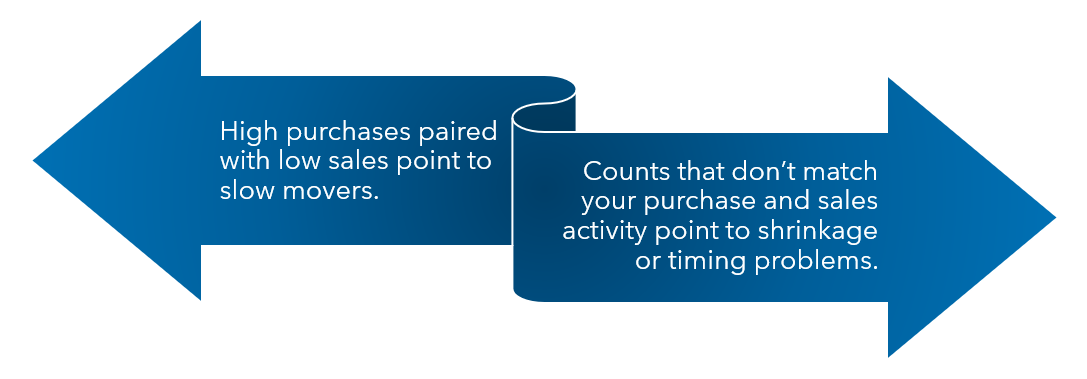
If the count is lower than it should be, something is disappearing. If the count is higher than it should be, the product is not selling at the pace you’re purchasing it. Looking at inventory this way helps you narrow the issue to specific items.
With that clarity, it becomes much easier to decide what needs to be addressed and where you may have an opportunity to adjust ordering, oversight or both.
2. Labor costs run high at the wrong times.
Labor costs stand out quickly because they move with your daily operations. Owners often catch the issue when overtime creeps up or when the team is staffed heavily during periods that were slower than expected. When labor doesn’t match the pace of traffic or sales, profitability changes fast, and it becomes a clear hospitality accounting signal that scheduling and demand are out of sync.
A good place to start is a review of overtime by role and shift. Pair that with a look at your staffing levels against the actual traffic or sales in the same timeframe. This comparison helps you see whether the schedule supported true demand or if you were paying for more coverage than the business needed.

Patterns usually become clear once the numbers are lined up. If overtime increased without a corresponding increase in revenue, that is a sign the workload did not justify the hours. If you were fully staffed during slow periods, that mismatch will show up as higher labor cost without higher sales to support it.
Taking this approach helps you focus on the specific times, shifts or roles where the disconnect is happening. With that visibility, you can adjust scheduling, revisit staffing assumptions or address operational habits that are driving unnecessary labor spend.
3. One location performs very differently from others.
If you run more than one location, you can often tell when one site is falling behind. The challenge is that the numbers blend together when everything is reported as one total, which makes it hard to pinpoint which location is causing the drag. Clear visibility by site is a basic part of good hospitality accounting, and it gives you the separation you need to see where performance is slipping.
Clear, location‑level reporting gives you a more accurate picture. When you can see each site’s results on its own, differences that were blurred together become much more noticeable. Profitability, labor usage, inventory movement and pricing trends often vary more than expected from one location to another, and those differences are what point you toward the source of the problem.
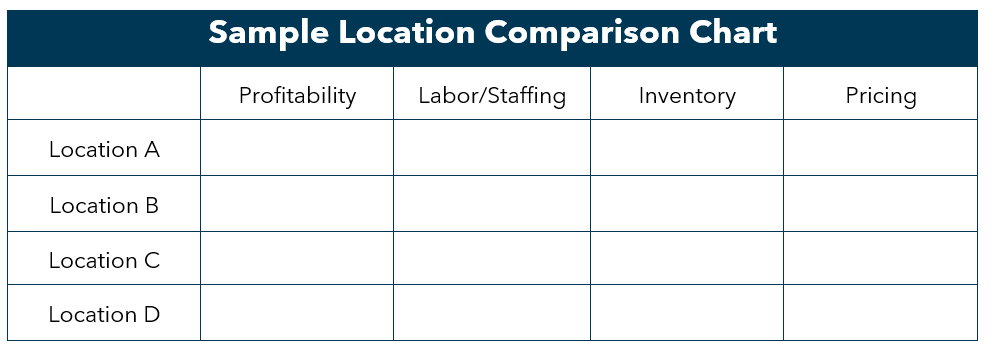
Once you identify that a location is falling behind, review how that site is operating compared to the ones performing well. A weaker location might have a different mix of staffing, slower inventory turnover or a pricing approach that does not match its demand patterns.
Those variations are easier to diagnose when the numbers are separated out, and they help you decide where to focus your attention so you aren’t making broad changes when the issue is isolated to one spot.
4. Pricing does not align with plate cost.
Pricing issues often surface when the cost of producing an item no longer matches what you’re charging for it. The clearest way to confirm that concern is to look at the actual plate cost (the combined cost of every ingredient required to serve an item). When you compare that total to the menu price, you can see right away whether the margin is still where it needs to be.
This review is especially helpful for high‑volume items. If those margins are thinner than expected, the plate cost and menu price comparison will show it. From there, you can decide whether the adjustment belongs in pricing, portioning or sourcing.
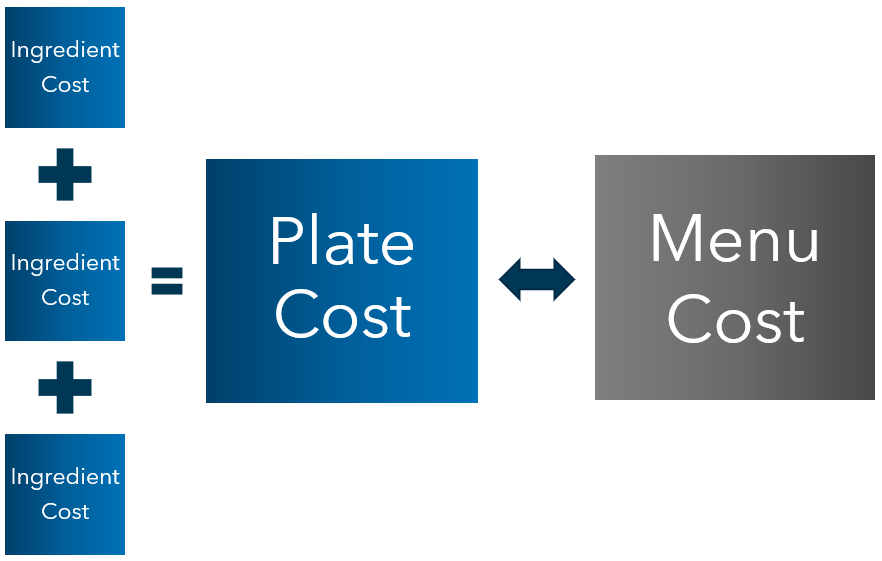
The goal is simply to make sure the cost of producing the item and the price you are charging are aligned in a way that supports the business. A simple, regular comparison like this keeps decisions grounded in hospitality accounting fundamentals without slowing down operations.
Learn More About Strong Hospitality Accounting Practices
When you have clear visibility into your numbers, the instincts you rely on every day become actionable. A data‑driven view helps you address problems sooner and invest confidently in the areas that are already performing.
To learn more about how strong hospitality accounting can support your business’s next decisions, contact your Warren Averett advisor directly, or ask a member of our team to reach out to you.
