
A SWOT Analysis for Restaurants: What’s Working, What’s Not and What’s Next?

In the restaurant world, success isn’t just about great food and loyal customers. It’s about understanding what’s really driving your growth, what’s holding you back and where your next opportunity might be.
Whether you’re dreaming of a second location, exploring new services or just trying to stay ahead in a fast-changing industry, a SWOT (strengths, weaknesses, opportunities and threats) analysis can help you see your business in a whole new (and more strategic) light.
Why Do a SWOT Analysis?
The SWOT analysis process helps restaurant owners see both the good and the challenging parts of their business. It’s a chance to recognize what you do well and spot problems early, and it’s helpful for any restaurant looking to grow and stay competitive.
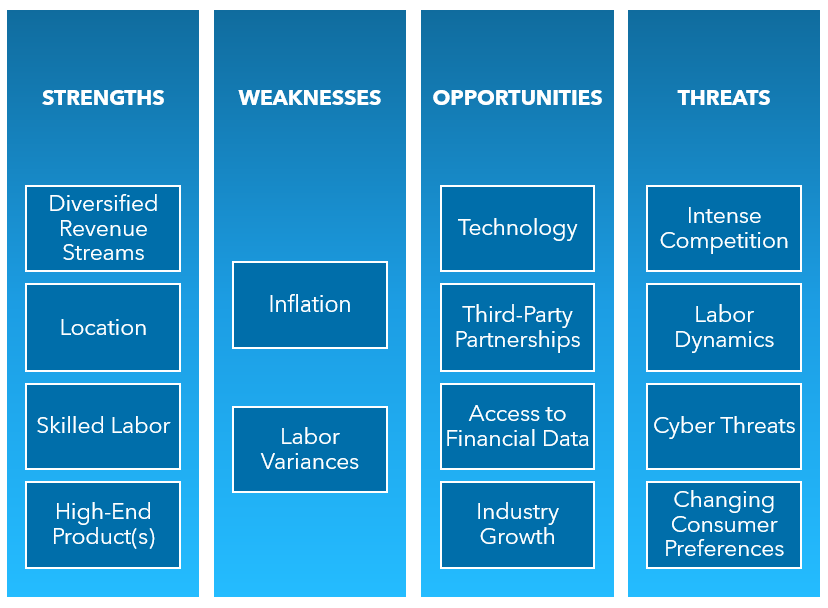
While each restaurant’s SWOT analysis will be different, we’ve outlined a SWOT for the restaurant industry as a whole for you to use as a jumping-off point as you think about your own business. Whether you’re new to SWOT analysis or just want a fresh perspective, this overview is meant to help you quickly map where your restaurant stands now (and where you could go next).
Strengths: How Are You Already Successful?
Where does your restaurant excel? Many restaurants find that having more than one way to make money is a big strength. Maybe you’re thinking about adding catering, selling merchandise or even franchising. These options can help you grow and keep your business strong.
Location is another huge factor. In some communities, being in the right spot means loyal customers and steady business. (But location can also be a weakness if you’re not where your target market is.)
Brand loyalty may also be a powerful strength you already have. If you’ve built a reputation and have customers who keep coming back, that’s a major asset, especially when you open a second location.
Skilled labor is important too. Having talented chefs and staff, and the ability to train them, can set you apart. And offering high-end products and unique experiences may keep your customers coming back.
Weaknesses: Where Does Your Restaurant Struggle?
Food and labor costs are always a challenge in the restaurant industry. Inflation, sourcing ingredients and finding the right price point to keep the doors open can be tough. The cost and quality of food can vary a lot depending on your suppliers, and while local products can help control costs, it’s not always easy.
Staffing is another common issue. If you have too many people on hand, the customer feels it. Not enough people on hand? The customer feels that too. And the balance you need to strike in the middle is a tough target to hit.
Opportunities: Where Can Your Restaurant Grow?
Technology is changing the game. Online ordering, QR code menus, kiosks and AI-powered tools are making operations smoother and helping owners understand their costs and performance in real time.
There may also be opportunities within your existing space, like catering, bulk food sales or party platters. Sometimes, growth doesn’t mean opening a brand-new location. It means making the most of what you already have.
Threats: What Should You Watch Out For?
Competition in the restaurant industry is fierce. With so many restaurants out there, you must find ways to stand out. (Consider how you might turn competition into cooperation with other restaurants to turn a common threat into an opportunity.)
Labor sourcing is also a constant threat. High turnover means you always need a pool of great talent. Once you find good people, train them, pay them well and take care of them. Happy employees mean happy customers.
Cybersecurity is another growing threat. Restaurants handle a lot of personal data, from credit cards to customer habits. Protecting your systems is crucial. If you lose customer trust by means of a cyberattack, you’ll also lose business.
Consumer preferences change fast, especially with social media. Staying on top of trends is a challenge, but it’s necessary to keep your restaurant relevant.
Making SWOT Work for Your Restaurant
Practically, it’s important to get your whole team involved in the SWOT analysis, from the owner to the servers. Everyone sees different strengths, weaknesses, opportunities and threats based on their roles, and uncovering these different angles can completely change the trajectory of your restaurant’s SWOT analysis.
Bringing in a professional can help, and regular reviews, whether monthly, quarterly or at least annually, are key. The restaurant world changes quickly, and staying ahead means constantly updating your strategy.
A SWOT analysis isn’t just a checkbox. It’s a living part of your strategic planning. Use it to see your business clearly, make smart decisions and keep growing in a competitive industry.
To learn more about how to lead a successful and financially healthy restaurant, contact your Warren Averett advisor directly, or ask a member of our team to reach out to you.