
IEEPA Tariff Refunds: What Manufacturers Should Be Doing Now

On February 20, 2026, the U.S. Supreme Court struck down sweeping tariffs under IEEPA, which opened the door for potential refunds and litigation. Already, more than $100 billion has been paid out according to Customs and Border Protection (CBP), but nearly a third of filings have been rejected.
At the same time, more legal filings are underway, creating even more uncertainty around how broadly the court’s decision will apply, whether companies will need to file individually or as a class action, how and when refunds will be processed, and ultimately, which entities qualify.
Potential recoveries could be significant, so now is the time to identify potential opportunities, understand the landscape and gather supporting documentation.
The Impact of Tariff Refunds on Manufacturers
For manufacturers with significant import activity, tariff refunds can impact cash flow, product costs, margins, financial reporting and business planning.
Potential Impact on Cash Flow
Depending on the amount involved, refunds could affect liquidity planning, working capital forecasts and short-term cash projections, so finance teams may want to estimate the potential amount recoverable even before the legal process is fully resolved.
Some importers are also evaluating whether interest could be recovered along with refunded duties. The availability of interest may depend on the legal basis for a particular refund and the outcome of ongoing litigation.
Potential Impact on Product Costs and Margins
Additional duties increase landed costs. Depending on a manufacturer’s pricing strategy, those costs may have been absorbed, passed along to customers, incorporated into inventory values, or reflected elsewhere in product and margin calculations. Documenting how duties were paid and how much was paid will help evaluate the impact and how any recovery might affect inventory costing, COGS analysis, margin reporting or financial statements.
Potential Impact on Decision-Making
Potential recoveries may also belong in broader financial planning discussions. A manufacturer considering financing, lender reporting, a major capital investment or significant changes to its operating plan could benefit from knowing whether a meaningful tariff recovery is possible.
Quantifying the potential refund opportunity also helps leadership decide how much internal time and outside professional support is justified in pursuing a claim.
Determining Eligibility for Tariff Refunds
The first challenge is determining exactly what tariffs the company paid and which entity paid them. Not every duty paid in recent years is part of the current refund opportunity.
Refund eligibility is generally tied to the entity that served as the Importer of Record (the legal party responsible for customer entry documents, classifying imported goods and paying duties). Companies operating through multiple entities or subsidiaries need to identify the right importer. A manufacturer should determine which entity imported each shipment and which entity actually paid the duties associated with potentially affected entries.
Companies will also need to look beyond their total tariff expense. The Harmonized Tariff Schedule (HTS) provides the classification framework used to determine duties on imported merchandise. Additional tariffs may be identified through Chapter 99 provisions appearing in customs documentation.
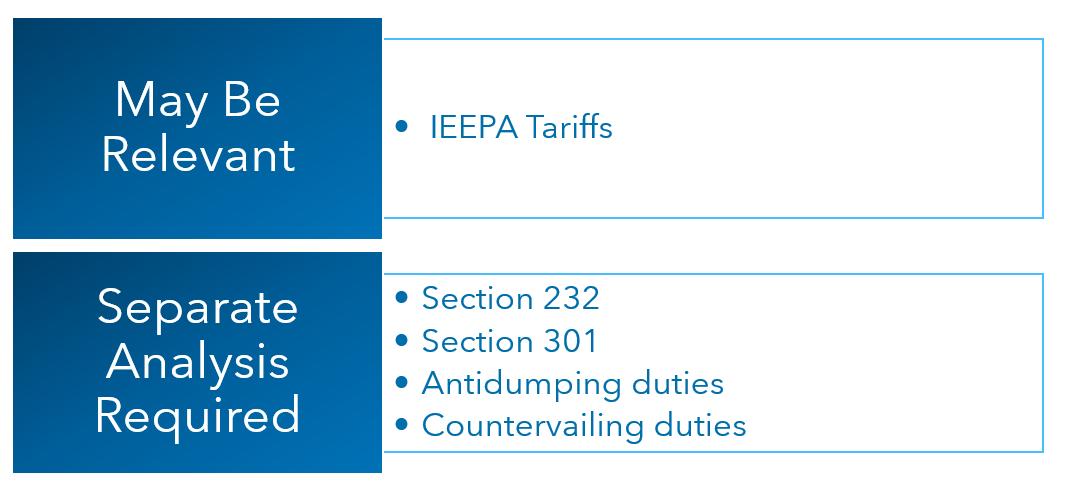
Entry summaries and related customs records can help determine whether duties were actually paid under an affected IEEPA provision. Companies will want to identify IEEPA tariff refunds separately from Section 232, Section 301 and U.S. Antidumping and Countervailing Duty (AD/CVD) programs.
Current refunds under consideration don’t necessarily apply to every special tariff program. Resist the temptation to run a report showing “tariffs paid” and assume the entire amount represents a potential refund. Instead, identify which tariff program applied to each entry.
Companies that imported goods from countries including China, Canada or Mexico may have paid IEEPA-related duties during relevant periods without necessarily distinguishing those charges from other tariffs in their internal accounting systems. Your refund analysis must separate those categories before a reliable recovery estimate can be calculated.
Determining that an entry was subject to a potentially affected tariff is only part of the analysis. The status of the customs entry itself may also matter.
An unliquidated entry remains open and has not yet been finalized by CBP. A liquidated entry is one CBP has reviewed and finalized, including the duties owed. Different refund procedures may apply depending on the entry’s liquidation status.
Current refund procedures cover certain categories of unliquidated entries, entries within applicable liquidation windows, and some reconciliation-related entries. Other categories continue to depend on later phases of the refund process and ongoing litigation.
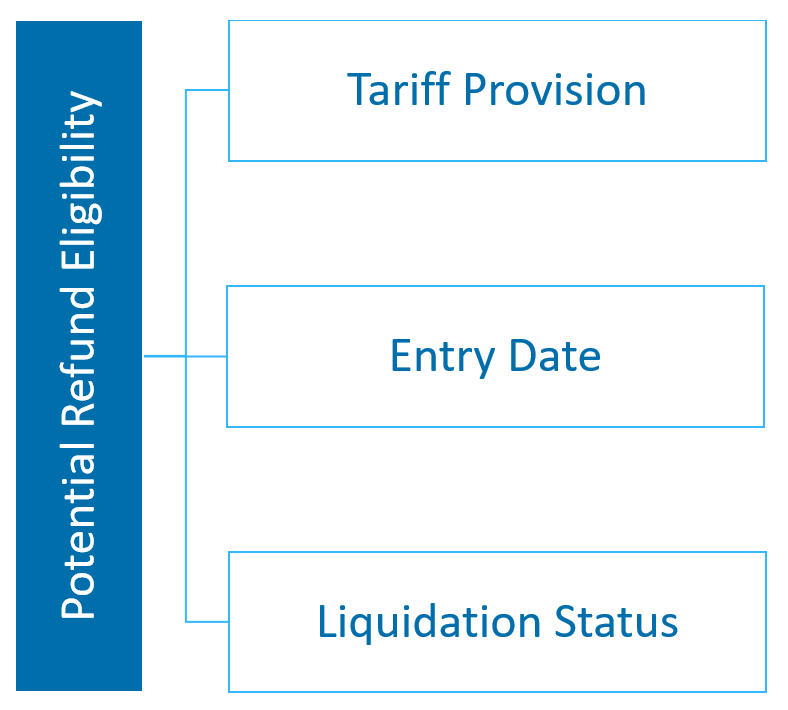
While finally liquidated entries subject to DOJ appeals remain unresolved, CBP expanded its CAPE portal to process entries awaiting reconciliation of final tariff calculations. So, eligibility analysis should consider at least three factors together:
- The tariff provision under which the duty was paid
- The date of the underlying entry
- The entry’s current liquidation status
Looking at tariff amounts alone may produce an inaccurate estimate of what is actually recoverable.
Documentation Manufacturers Should Gather for Potential Tariff Refunds
For each potentially affected entry, companies should consider gathering:
- CBP Form 7501 (Entry Summary) showing entry numbers, HTS classifications and duties paid.
- Applicable Chapter 99 provisions
- Current liquidation status
- Importer of Record information for each transaction
- Commercial invoices
- Bills of lading and other shipping records
- Duty payment records
- Relevant customs broker documentation
The goal here is to build a defensible record that connects each potential refund amount to a specific customs entry. Once the records are assembled, companies can begin quantifying the potential opportunity.
Management may want to calculate total IEEPA duties paid during the relevant period and then break the amount down by variables such as year, supplier, product category or business unit. This can help identify where the largest potential recoveries are and whether pursuing them is worth the administrative and professional effort involved.
Collecting documentation can also expose missing records or inconsistencies before they become obstacles to a claim. (Inadequate records are one of the biggest reasons claims have failed to be validated to date.)
Having a centralized system organized around individual customs entries can make future reviews significantly easier. Ideally, broker records, ACE records and internal accounting information should reconcile. The responsibility for collecting and maintaining supporting documentation should also be clearly assigned.
For companies with thousands of entries, completing this work early can save time later.
Understanding CAPE and the Refund Process
CBP is using its Consolidated Administration and Processing of Entries (CAPE) refund-processing functionality within the Automated Commercial Environment (ACE) to process qualifying IEEPA duty refunds electronically. CAPE Declarations are submitted through the ACE Secure Data Portal.
Not every potential refund is being handled at the same time. CBP has implemented processing in phases, with different types of entries becoming eligible as litigation and administrative guidance develop. So, entries that are not eligible for processing currently may be eligible at a later date.
Filing Requirements
During preparation, entities should confirm:
- Active ACE Secure Data Portal access
- ACH refund enrollment with current banking information
- The ability to prepare the required CAPE Declaration
- Entry information that matches CBP’s records
Customs Broker Involvement
An authorized customs broker may also submit CAPE Declarations for an importer, but the importer is still responsible for the accuracy of the information submitted. Only the Importer of Record or an authorized customs broker may make the submission.
Common Problems Can Delay Processing
Seemingly basic data errors can complicate a refund request, such as:
- Incorrect entry numbers
- Incorrect HTS classifications
- Incomplete supporting documentation
- Missing ACH enrollment information
- Entries included that do not fall within current eligibility requirements
- Discrepancies between ACE records and company records
These are all common mistakes that emphasize why it’s important to gather and review everything ahead of time. The sooner issues are identified, the more time you have to correct any deficiencies.
Potential Refunds Can Create Accounting Questions
Manufacturers should also consider whether a potentially significant tariff recovery creates financial reporting implications. For example, the existence of a possible refund doesn’t automatically mean a company should record a receivable.
Recognition timing depends on the facts surrounding the claim, the degree of uncertainty and the likelihood of recovery. Finance teams may need to revisit their accounting treatment as litigation progresses and eligibility becomes clearer.
At the same time, even when a receivable isn’t recognized, a potential material recovery may raise disclosure questions (which is why companies should check with legal, accounting and auditors well before a refund is received, particularly when a potential recovery might change financial statements, forecasts, reporting or board communication.)
Still, the refund landscape remains fluid, and there are legal challenges that may change what ultimately happens. Because new developments may affect both eligibility and procedure, avoid treating today’s refund framework as settled.
What Manufacturers Should Do Now
Manufacturers don’t have to know the final outcome of the litigation to begin preparing. A practical review can start with identifying imports that were subject to potentially affected IEEPA provisions and calculating the amount of relevant duties paid.
From there, separate those duties from Section 232, Section 301, antidumping, countervailing, and other tariff programs. Entry dates should be reviewed carefully because the current opportunity applies to specific IEEPA tariffs imposed during particular periods.
Then, determine liquidation status, confirm ACE access and ACH enrollment, gather supporting documentation, and reconcile information across your systems. It’s also important to establish a process for monitoring developments and coordinating with customs brokers, accounting advisors and legal counsel when appropriate.
Preparation May Be the Most Important Step
The potential value of an IEEPA tariff refund begins with knowing what the company actually paid. The amount recoverable, if any, will vary based on import volume, tariff classifications, entry dates, liquidation status and the outcome of continuing legal proceedings.
With such high stakes, preparation is critical. Companies that identify affected entries, quantify duties paid, reconcile their records, and understand where those entries currently fall within the refund process will be better equipped to respond as the rules evolve.
The most valuable action for many manufacturers today may not be filing a claim immediately but completing the groundwork necessary to act when the company’s entries become eligible. As courts and CBP continue to clarify the process, manufacturers that already understand their exposure and have their documentation organized should be able to evaluate potential recovery opportunities more quickly and with greater confidence.
To learn more, contact your Warren Averett advisor directly, or ask a member of our Manufacturing Industry Accounting and Advisory Team to reach out to you to start the conversation.
This article is provided for general informational purposes only and should not be construed as legal, financial, tax or accounting advice. Laws, regulations and circumstances vary, and guidance may change. Consult qualified legal, financial, tax or accounting professionals regarding your specific situation.
