
What Is a vCISO? (And Does Your Company Really Need One?)

A vCISO can help shield your company against costly cyberattacks, safeguard your finances, protect your reputation and defend the very future of your business. So, what is a vCISO? What does a vCISO do? And how does having one boost your bottom line?
What is a vCISO?
A vCISO (virtual Chief Information Security Officer) is a senior-level cybersecurity professional who works remotely or on a part-time basis to provide strategic guidance and oversight for an organization’s information security program. A vCISO is a highly experienced cybersecurity architect for your business.
What does a vCISO do?
A vCISO typically offers insight and support in the following areas:
- Develops a comprehensive cybersecurity roadmap that aligns with your business goals and risk tolerance
- Proactively identifies and analyzes vulnerabilities in your systems, networks and data
- Utilizes and implements a cybersecurity framework, like NIST, ISO 27001, etc., ensuring best practices are followed
- Recommends, creates and implements security policies and procedures to reduce risk and promote compliance
- Oversees your company’s response in the event of a breach, working to contain threats quickly and minimize damage
- Helps ensure industry-specific regulations (e.g., HIPAA, PCI DSS, GDPR) are followed and assists in audit preparation
- Assesses the security posture of third-party vendors and partners to minimize supply chain risks
- Designs and implements security awareness programs to educate your workforce about cybersecurity threats and best practices
- Regularly reports on cybersecurity metrics, risks and strategies to the board or C-suite in clear business language

How can I tell if my company needs a vCISO?
Cyberattacks are an ever-present danger, and no business is safe. Strong cybersecurity leadership is essential for every organization.
A vCISO can be especially beneficial if your company is in any of these situations:
- Your IT team is stretched thin, lacks cybersecurity expertise or struggles to keep up with the constantly evolving threat landscape
- Regulatory compliance is a challenge for your organization
- You operate in an industry (like finance or healthcare) with strict security regulations
- You’ve experienced security incidents and need to investigate breaches, improve your defenses or minimize the chance of future incidents
- You lack strategic cybersecurity vision or you don’t have a long-term plan to protect your business from threats
- Your company’s Board, leadership or executive team recognizes the cybersecurity risk and demands a more structured approach provided by a dedicated, experienced security leader
What’s the difference between having a vCISO and having an internal IT team at my company?
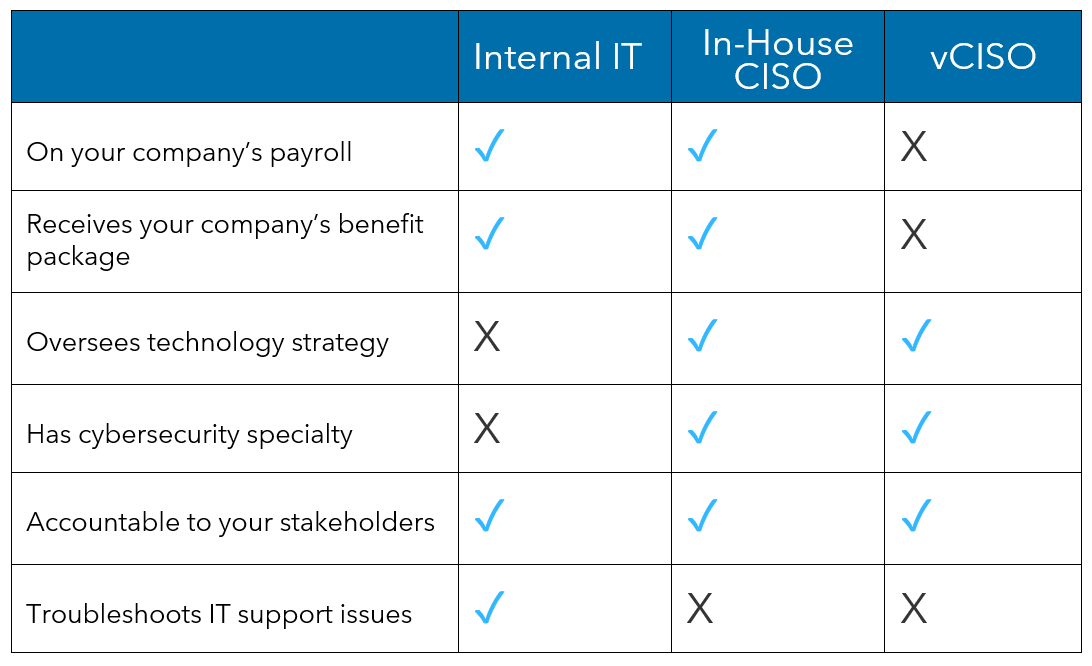
Your internal IT team handles day-to-day issues, like connectivity problems and network support. A vCISO is responsible for the big picture of your company’s technology and security, designing a strategy, choosing the right tools and reporting on your overall cybersecurity posture. Your IT team needs broad technical knowledge for daily operations, while your vCISO brings deep, specialized expertise in risk management and cybersecurity.
What if my company can’t afford a vCISO?
If your company can’t afford a full-time vCISO, there are still ways to strengthen your cybersecurity posture. Consider a fractional vCISO, who provides expert guidance for a set amount of time each month.
The best option depends on your company’s specific needs, budget and existing IT capabilities. Remember to reassess regularly, as a vCISO may become a smart investment as your company grows.
How should my company get started with a vCISO?
If you’re ready to install sound leadership into your cybersecurity program though a vCISO, contact your Warren Averett Technology Group advisor directly, or ask one of our cybersecurity experts to reach out to you to get the conversation started.
