
ESOP Pros and Cons: Is an ESOP Right for Your Company?

Determining whether an ESOP is a good fit for your organization requires careful analysis and examination. As with any strategic decision, your company should carefully weigh the positives and the negatives.
Here, we’ve outlined some of the ESOP pros and cons your company should consider if you’re exploring whether this type of plan is right for your organization.

ESOP Pros and Cons: Taxation
ESOP Pros: Various benefits can reduce a company’s tax burden
ESOPs are commonly known for their significant tax benefits for both the legacy owners and the company; specific advantages depend on your organization’s structure.
- C Corps: For C-Corporations, the legacy owners have the potential to take advantage of an Internal Revenue Code Section 1042 exchange, which allows capital gains realized on the sale of the company to the ESOP to be delayed if all criteria are met.
- S Corps: Since an ESOP trust is considered a tax-exempt shareholder, all company income that is allocable to the ESOP trust is exempt from federal income tax.
ESOP Cons: Increased compliance considerations
Even though there are some great tax benefits, ESOPs are subject to measures designed to prevent an ESOP from being used as just a tax shelter. To ensure that your company’s comprehensive tax strategy abides by all relevant regulations, you’ll need to put forth an effort to educate yourself on the rules and find an accountant who specializes in ESOPs.
ESOP Pros and Cons: Administration and Advisory Oversight
ESOP Pro: Specialized advisors can offer customized insight for your plan
Because of the nuanced nature of ESOPs, most companies work closely with a team of specialized professionals to design a plan that works best for their company. This means your company can leverage the most tailored support and insight for your unique plan.
ESOP Cons: Multiple professional fees can become expensive, and set-up efforts can distract from your other projects
Because ESOPs require specialized expertise from multiple advisors across various disciplines, professional fees can become one of the most expensive aspects of having an ESOP.
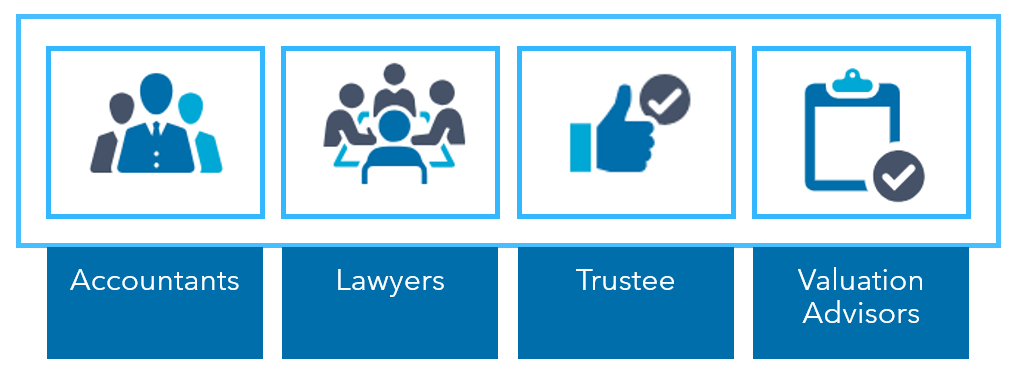
Each ESOP should have the following advisors:
- ESOP Accountants: ESOP accounting has unique and specific rules under generally accepted accounting principles (GAAP). There are also many tax considerations for both the company and the ESOP before and after the creation of an ESOP. It’s important to make sure you’re working with accountants or auditors who have specialization in ESOPs.
- ESOP Lawyers: ESOP legal considerations are also highly complex. It’s important to have ESOP-knowledgeable attorneys draft the plan documents that are submitted to the IRS.
- ESOP Trustee: The ESOP trustee takes on a fiduciary role to safeguard the interests of the employees. The trustee can be an individual within the company who’s willing to take on this responsibility, such as the CFO, but most companies engage an external trustee that specializes in ESOP fiduciary services.
- Valuation Advisors: When an ESOP is established, it’s important under the ERISA regulations to make sure that the ESOP is not paying more than fair market value for the shares. This requires an initial professional valuation during the ESOP’s establishment, and then shares must be valued annually on an ongoing basis.

ESOP Pros and Cons: Transaction Considerations
ESOP Pro: Significant advantages to exiting business owners
ESOPs are an attractive option for owners looking to exit a business for a few key reasons:
- Involvement: ESOP transactions allow a business owner to sell a majority of the business and still maintain control over the entity.
- Timeframe: An ESOP transaction doesn’t have to happen all at once. Business owners can sell their business shares to the trust over time.
- “Second bite of the apple:” ESOP transactions often come with warrants, so, as a company appreciates in value, the owner could exercise these warrants to benefit from the appreciation of the company.
ESOP Con: Valuations are discounted
ERISA regulations state that an ESOP must not pay more than fair market value for the stock. This may be lower than what a strategic buyer (e.g., a larger competitor) would pay, since a strategic buyer might pay a premium to benefit from synergies. So, if you have buyers in your industry that are interested, you could potentially get a higher price from them than if you sold to an ESOP.
Additionally, because a private company’s ESOP shares can’t be sold as readily as shares in a public company, the valuation is discounted.
Keep in mind, however, that ESOPs are required by law to make a market for their shares. Because of this, there is some marketability, even if it is a private company, so the discount for the lack of marketability is lower.
Determining if an ESOP is Right for Your Company
To successfully implement an ESOP, it’s important to do your research, know the pros and cons and understand the risks to the business. You also need to have a solid plan in place for employee communication.
Good candidates for an ESOP are companies that are profitable, have a consistent record of positive EBITDA, have an educated workforce and operate in an industry with a limited M&A market.
To learn more about if an ESOP is a fit for your organization, or if you’d like to discuss weighing ESOP pros and cons for your specific company, contact your Warren Averett advisor directly, or ask a member of our team to reach out to you.