
Restaurant Industry Trends for 2023 (And How To Respond to Them)

As an industry with $799 billion in U.S. sales and 14.5 million U.S. employees, the restaurant industry is a keystone influencer in our society.
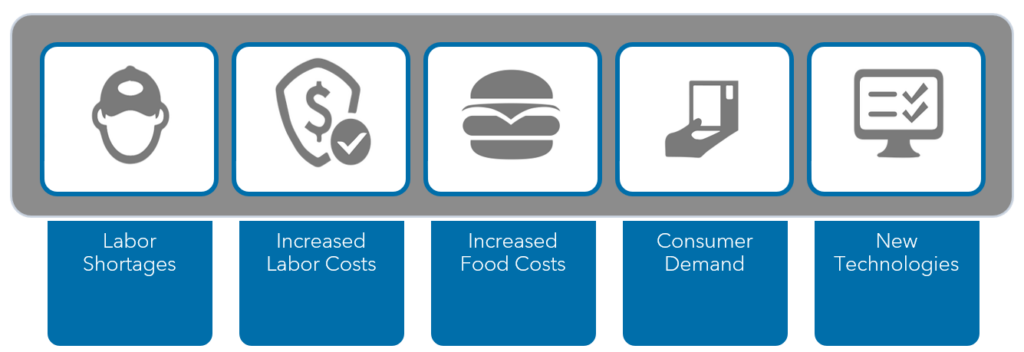
Yet, as 2023 begins, many restaurant owners are facing new trends and challenges—such as labor shortages, increased labor costs, increased food costs, shifting consumer demand and the implementation of new technologies—that have the potential to change the landscape of the entire restaurant industry.
And while some of these challenges may have obvious impacts, without proper preparation and direction it can be difficult to respond to these restaurant industry trends.
Here are a few restaurant industry trends to expect now and into 2023—and how to best respond to them.
Restaurant Industry Trends for 2023
Labor Shortages
Because of its reliance on labor, the restaurant industry has greatly felt the effects of operating in a post-COVID-19 environment.
In fact, employee headcounts are down 462,000 as of November 2022 when compared to pre-pandemic levels. The decreased labor force is a direct consequence of 3.6% of people ages 55-70 deciding to retire early spurred on by COVID-19.
In total, the restaurant industry has added nearly 2.2 million jobs over the last 23 months. Despite such healthy gains, this industry is experiencing the greatest labor shortages among all U.S. industries.
Increased Labor Costs
Labor shortages have created a major imbalance in labor supply and demand. This has naturally caused a spike in labor costs for those in the workforce.
Nearly 86% of restaurant owners have reported that their labor costs are higher in 2022 (36% of sales) than they were in 2019 (33% of sales), which is challenging for all in the restaurant industry due to overall staff numbers being down.
Increased Food Costs
One of the most significant restaurant industry trends is the increase in food costs.
Almost 88% of restaurant owners have experienced higher food and beverage costs in 2022 (36% of sales) when compared to pre-pandemic statistics (33% of sales). This is a direct correlation with an increase in menu input items, which increased 12.4% between October 2021 and October 2022.

The restaurant industry has not seen this type of inflationary increases since 1979. According to data compiled from the Bureau of Labor Statistics, the consumer price index for food away from home increased 8.6% between October 2021 and 2022.
Shifting Consumer Demand
Many restaurant owners are benefiting from rising consumer interest in gourmet foods, which can be sold at higher margins than traditional menu offerings.
The current patron prefers trendy menus, local ingredients and a unique experience. Menu offerings must be in tune with patron preferences and adapt to ever-changing consumer tastes. Local ingredients, signature cocktails and rotating taps of seasonal craft beers play an important role in creating these trendy menus.
Unique experiences are offered to patrons in the form of convenient locations (close to residential areas), game nights, activities, special events and high levels of customer service.
Implementation of New Technologies
Restaurant operations rely heavily on point-of-sale (POS) technology to track sales and inventory, touchscreen ordering programs are used to ensure accurate customer orders and reservations software is used to maximize traffic flow and seating.
Ineffective communication between these technologies can lead to operational errors and customer complaints. Other technology-related restaurant industry trends include food pickup lockers, curbside delivery and customer payment via smartphones.
Recent pressure to add value to delivery services has caused restaurant owners to utilize advanced technologies and partner with other companies to offer seamless experiences to their patrons.
Opportunities to Capitalize on Restaurant Industry Trends in 2023
The leaders that are commonly successful in the restaurant industry create unique customer and employee experiences, control costs and team up with a restaurant industry advisor who specializes in the restaurant industry.
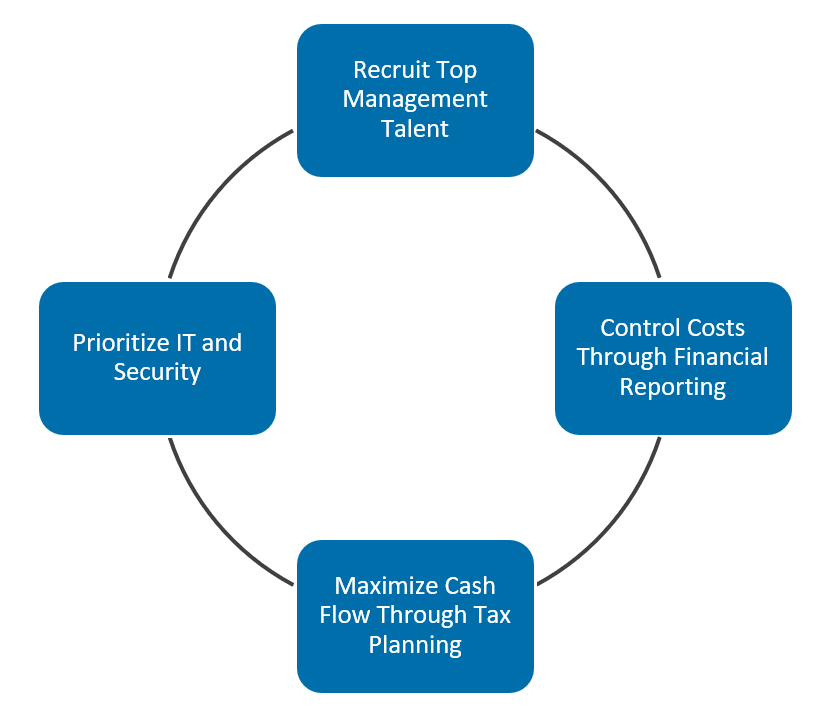
Opportunities for entrepreneurs in the restaurant industry to consider in 2023 include the following:
- Partnering with a professional/regional recruiting firm to identify top management talent
- Controlling costs through accurate/timely financial statement reporting and communications
- Exploring tip credits, employee retention credits and other available tax credits to maximize cash flow
- Connecting with an IT professional team that offers IT services including compliance and assessments, cybersecurity, IT remediation services, business software, system infrastructure and staffing and technical support
Connect with a Restaurant Industry Advisor
Every restaurant is unique, and each has different needs. The best way to effectively position your business to respond well to industry trends is to partner with a knowledgeable restaurant industry advisor.
Warren Averett’s Retail and Consumer Industry Group is familiar with forecasting industry challenges and positioning business owners to thrive as they navigate associated challenges.
With decades of experience providing accounting services for restaurant industry clients, Warren Averett’s team brings specialized knowledge that can help you navigate the competitive challenges of a market that is driven by cash flow concerns, customer traffic and the need to secure a successful brand. We aim to be the partner you need, providing scalable services that are driven by your goals.
For more information or for insight that’s specific to your business, connect with a Warren Averett advisor.