
AI Risk Management: Weighing the Pros and Cons of AI in Your Business

Artificial intelligence (AI) is rapidly changing the way we live our daily lives. From voice-activated home personal assistants to self-driving cars and chatbots, AI has permeated our daily routines.
While doing our best to avoid Hollywood film conversations of robots and AI forming its own opinion and taking over the world, we must remember that artificial intelligence really isn’t intelligent at all. AI is only as smart as what we provide to it.
And what we provide to it is our information.
The Pros and Cons of Using AI in Your Business
While AI has many potential benefits, there are also real concerns about its use that companies need to address. As with the use of any new technology, every user must decide whether the gain in convenience, efficiency and productivity is worth the related loss in security, confidentiality and privacy.
Pros of Using AI in Your Business
There’s no doubt that AI can offer incredible advantages to today’s companies.
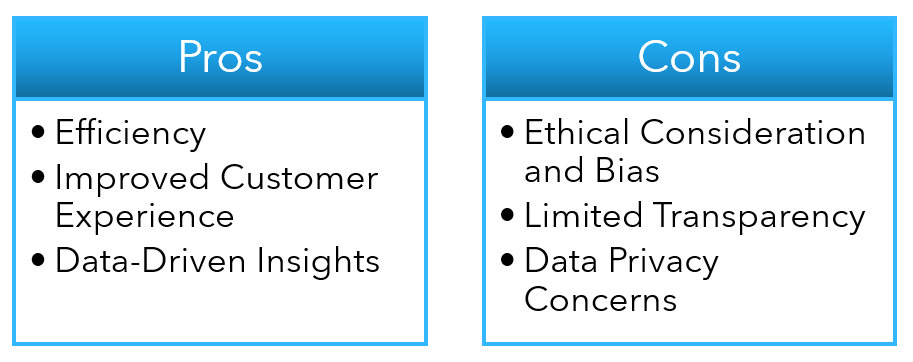
AI can be used to complete many repetitive tasks, such as data-intensive activities, which can make up a large portion of your employees’ duties. When freed from performing mundane tasks, your team can apply more time to more meaningful aspects of their jobs.
Using AI to automate these repetitive tasks can help reduce labor costs and limit costly human errors. It also adds efficiency to business operations by completing the tasks much faster and reducing wasted time. AI systems can enhance many of your business’s processes—from product idea generation to the testing and maintenance of the finished product.
AI can also allow you to give your customers a better experience with your organization by providing a range of AI-enabled self-service options. For example, AI chatbots can provide responses in real time instead of making customers call the company or wait for an email response.
Additionally, AI can provide you with stronger data-driven insights into your organization. AI solutions can filter and analyze the vast amounts of data your business collects and quickly reveal patterns that are difficult to see with the naked eye. You can use the insights gained to make better informed, strategic decisions.
Cons of Using AI in Your Business
While AI offers many benefits, there are also risks. Considerations about ethics, transparency and bias should be taken seriously, and data privacy risks shouldn’t be overlooked.
AI systems can perpetuate biases from training data, leading to discriminatory outcomes like unfair hiring or biased customer targeting. These ethical risks can erode trust, damage reputations and trigger legal or public backlash against businesses.
Additionally, as AI becomes more advanced, it can collect vast amounts of data, including sensitive information (with or without proper consent), which has led to concerns about that data being misused.
Some of the most sophisticated AI algorithms can analyze and store data about your company and your employees, including their internet activity, personal and political preferences, personal data and photos, user location and even sensitive health and biometric data.
While mobile application developers have been forced to become more transparent in data collection efforts, the masses still flock to applications such as TikTok that openly capture user data.
Employees at your organization may not be aware of how their personal information is being collected and analyzed by AI—or they may know of the risks but simply not be concerned.
This common phenomenon means that companies should take specific steps toward AI risk management to ensure the security and confidentiality of both personal and company information.
How Should My Company Address AI Risk Management?
In today’s digital world, every company needs to consider AI risk management. Here are a few AI risk management considerations to help guide your employees on the proper use of these technologies.
Revise Your Acceptable Use Policies
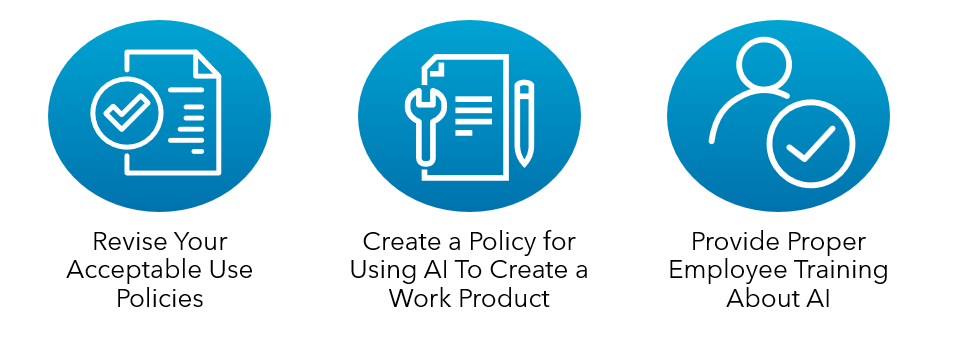
In the past, acceptable use policies only contained constraints and best practices for passwords, online behaviors etc., to best represent a company online.
As part of a modern and thorough AI risk management infrastructure, acceptable use policies now need to be updated to offer guidance on the use of AI technologies. Consider including areas such as the following:
- Utilization of voice-activated devices in work and home offices (Amazon Alexa and Google Home)
- Proper use of social media applications on company-owned devices and mobile phones
- Delineation between personal and company-owned devices and a restriction to prevent information sharing between the devices
If utilizing AI technologies such as chatbots, ensure that tools are reviewed and approved internally, and consider blocking the use of any unvetted AI tools to prevent accidental data leaks.
Create a Policy for Using AI To Create a Work Product
Your employees are probably already using AI both in their personal capacities and at work.
Addressing it and issuing proper guidance is the best method to ensure your company’s sensitive information is kept secure. Consider developing an AI policy that includes guidance for the following areas:
- Define when and how it’s acceptable to use AI and chatbot systems for public knowledge areas (such as fact-checking, document edits, idea generation, etc.) This will vary depending on your organization’s type of work and your internal risk tolerance.
- Provide a clear definition of associated risks of using open AI systems, such as privacy, confidentiality, contractual and intellectual property risks.
- Increase internal transparency by labeling any AI-generated documents to allow for additional layers of review as necessary.
Provide Proper Employee Training About AI
As with any other technology, training is vital.
As part of your ongoing security awareness program for your employees, introduce AI topics frequently. Ensure that employees are constantly reminded of the policies you have in place and the proper use of any new technologies.
If training currently takes place annually, consider introducing monthly technology emails, brief training sessions during scheduled company-wide gatherings or interactive AI workshops to discuss the organization’s preferred method of utilizing new technologies.
Learn More About AI Risk Management and Protecting Your Company Against Other Data Risks
As AI and other technologies continue to develop, the potential benefits will inevitably help organizations streamline operations and automate many tedious tasks. However, we must ensure that we find balance between embracing new technologies and keeping the security, confidentiality and privacy of our sensitive data in mind.
To learn more, contact your Warren Averett advisor directly, or ask a member of our team to reach out to you.
This article was originally published on April 12, 2023 and most recently updated on April 28,2025.