
Seven Steps to Pick the Right Cybersecurity Insurance Policy for Your Business

As cyberattacks become more prevalent, the right cybersecurity insurance policy is a must-have safety net for companies of all sizes and industries.
What is Cybersecurity Insurance?
Cybersecurity insurance is an insurance product that provides coverage against various cyber threats. It protects companies from the losses incurred from attacks that are covered under the policy and can be a vital part of a full cybersecurity plan.
Why Do Companies Need Cybersecurity Insurance?
To remain competitive in the digital age, most companies have had to digitize their operations and processes while relying on massive datasets. This increased reliance on technology, along with the growing value of data as a strategic asset, has made nearly every company an accessible target for cyber attackers.
Cyberattacks have been escalating in frequency, sophistication and severity. When an attack occurs and eventually becomes public, it can negatively impact a company on multiple fronts, including your operations, brand reputation, share price and revenue pipelines.
Cybersecurity insurance has emerged as a way for businesses to mitigate their losses, financial and otherwise, that are caused by a cyberattack.
What Protections and Coverage Can a Cybersecurity Insurance Policy Offer?
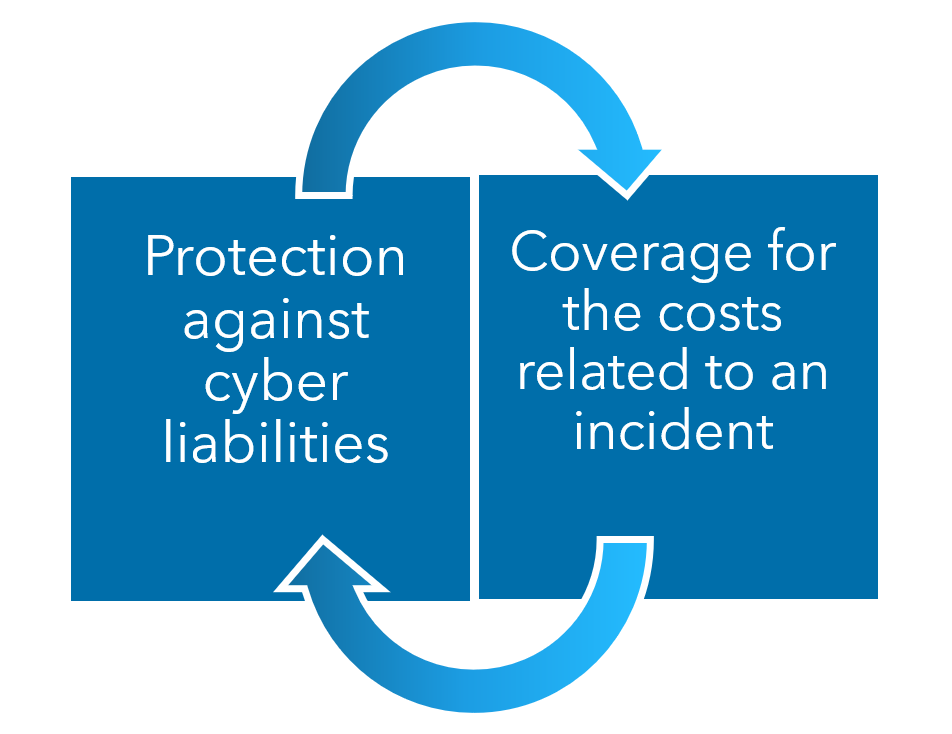
Each policy is unique, but most cybersecurity insurance policies will include some form of:
- Protection against data breaches, cyberattacks and other liabilities
- Coverage for the costs related to data breach notification, forensic investigations, legal expenses, regulatory fines and business interruption losses
However, to truly be successful, you must select the right policy for your business.
How Can I Select the Right Cybersecurity Insurance Policy for My Business?
Choosing the right cybersecurity insurance policy is an involved, methodical process. Making sure that you get the right coverage at an affordable price and have the necessary cybersecurity controls in place can be a challenge.
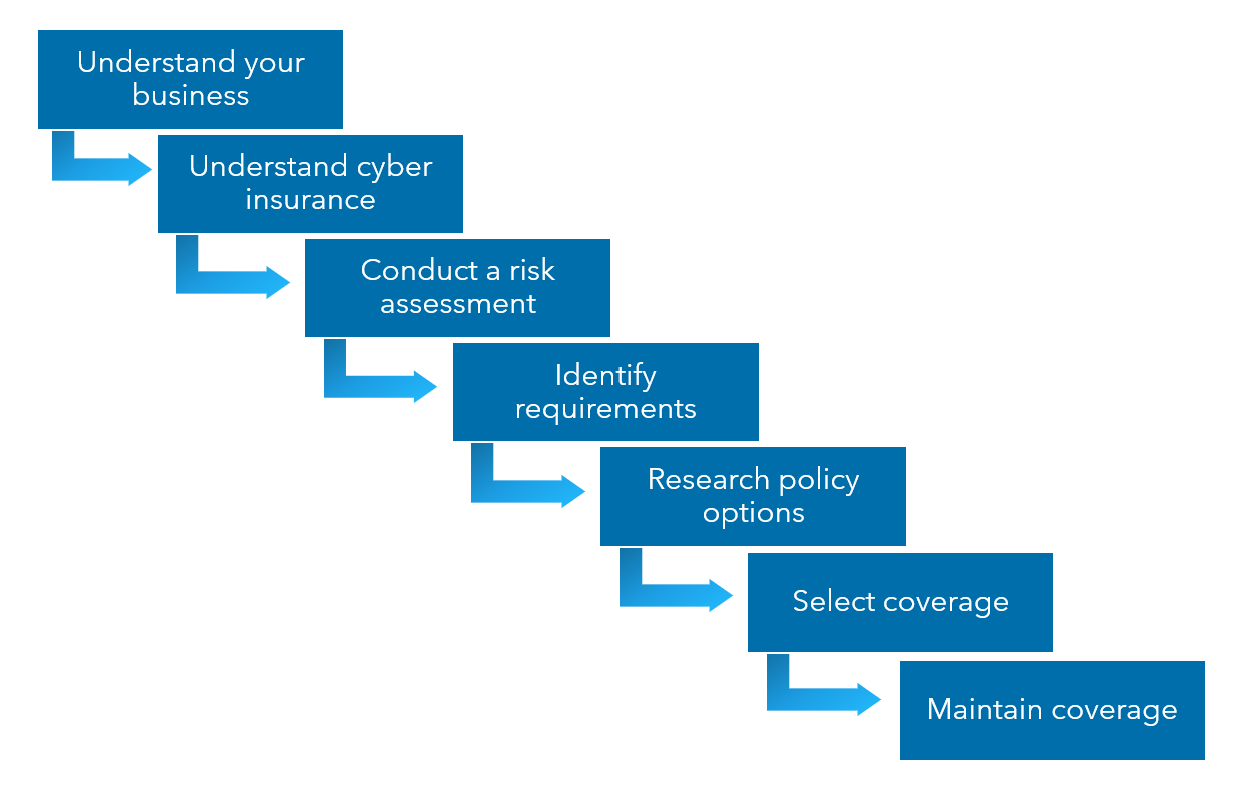
Here are seven steps you can take to ensure that you are making the right choice.
1. Understand your business.
Before you begin the process of selecting a cybersecurity insurance policy, it’s important to assess the relevant factors of your technology infrastructure, company size, goals, obstacles and budget.
Interview the appropriate people in your company, inventory data, understand high-risk scenarios and review existing coverage. It’s important to have a clear view of how much coverage your business may need based on your unique situation.
2. Understand the basics of cybersecurity insurance.
It’s important to have a general knowledge of policy coverage, benefits, limitations, exclusions and additional coverage options in order to set the stage for a successful selection process.
3. Conduct a risk assessment.
A comprehensive risk assessment provides insights into any potential vulnerabilities by revealing your organization’s specific risk exposure. The more insight you have into where your company may have cyber weakness, the more prepared you’ll be to select a proper policy.
4. Identify policy requirements.
Using insights obtained from the risk assessment, seek tailored cybersecurity insurance coverage based on your company’s specific needs. Based on the identified risks, determine the essentials you’ll need in a policy at a minimum. Then, consider additional things that would be nice to have beyond the necessities.
5. Research policy options.
With your list of requirements, browse available options in cyber liability, breach response services and business interruption coverage. This step requires that you:
- Do your due diligence in researching the reputations of providers, coverage, options, premiums and a provider’s financial stability. You may begin by consulting your business partners, industry associates and professional network. Prioritize those providers and policies that come closest to aligning with your company’s needs. If possible, try to obtain detailed quotes from multiple cybersecurity insurance providers so that you have a baseline for comparison.
- Understand the terms of the policies. Closely review the terms and conditions of the policies to make sure that they make sense for your company’s risk profile and are directly aligned with your company’s needs.
- Analyze what is covered and what is not. This is a big one! Don’t assume all cyber incidents are covered.
- Make sure that deductibles are within your budget and know exactly when the policy will become effective.
6. Select your coverage.
After a thorough comparison of policies, it’s time to select the coverage that’s right for your company. Avoid accepting the first policy that is offered unless it is actually the very best policy for your company.
7. Maintain coverage.
After you’ve chosen a policy, the process doesn’t end there.
Keep in mind that cyber risks will evolve over time as the cyber threat landscape continues to change. It’s wise to establish a routine for regularly reviewing and adjusting your cybersecurity insurance coverage if necessary.
It can be valuable to enlist the help of a technology expert to assist with your application and with maintaining your coverage. A qualified expert can help you determine what updates to your network and IT security solutions may be required to obtain (or maintain) coverage and to ensure the policy will pay out in the event of a cybersecurity incident.
Learn More About Choosing the Right Cybersecurity Insurance for Your Company
Cybersecurity insurance selection requires careful consideration because every business—no matter its size or industry—is at risk for a cyberattack.
But cybersecurity insurance is just one component of a comprehensive cybersecurity strategy. It is important to invest in a robust cybersecurity solution and provide ongoing employee cybersecurity training in order to minimize risk. To know exactly what kind of cyber policy your company needs, start with a cybersecurity assessment.
Warren Averett Technology Group can assist in the process of performing the risk assessment, answering the cyber insurance questionnaire and implementing any needed hardware and/or security solutions in order for your company to become compliant with the requirements of the policy. Connect with a Warren Averett Technology Group advisor to get started.
This article was originally published on July 28, 2023 and most recently updated on October, 16, 2025.
