
The Most Common Kinds of Corporate Fraud (And How to Protect Against Them)

Hybrid work trends, rapid hiring changes and technology-driven processes have reshaped how businesses operate. Those same changes have also created new opportunities for fraud.
Modern fraud isn’t just about someone skimming cash from a register. Today, fraud can involve digital transactions, vendor relationships and even payroll systems.
Even if you trust your team and have written policies, no business is completely insulated. Fraud often starts small (like a falsified expense report or a duplicate payment to a vendor) and grows quietly until the damage is significant. By the time you notice, you may be dealing with lost cash, strained relationships and operational setbacks that take months to recover from.
The good news is that you can take steps now to reduce your risk. In this article, I’ve outlined the most common types of fraud I see businesses face as a fraud examiner and the practical actions that make a real difference.
The Four Most Common Types of Fraud in Businesses
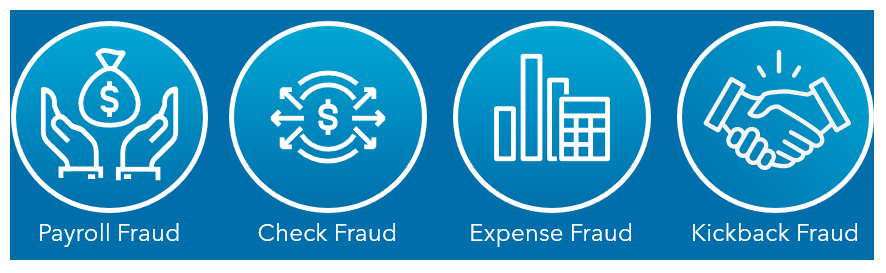
While fraud can take on many different forms and is constantly evolving, here are four of the most common types of fraud that occur within businesses.
Payroll Fraud
Payroll fraud generally encompasses manipulation of the disbursement of funds to employees. Payroll fraud schemes would include employees disbursing extra, unauthorized pay to themselves or charging hours to be paid that they haven’t worked. Payroll fraud would also include an employee taking vacation time without recording the time as leave.
Check Fraud
Check fraud generally refers to someone disbursing payment via check through unauthorized means. A simple example of check fraud would be an employee writing a check to himself or cashing a business check and keeping the money.
Still a more sophisticated, yet common, form of check fraud would be for an employee to write a check to a fake vendor—or writing a check to a legitimate vendor for more than an invoice is worth, receiving a refund from the vendor for the excess amount and pocketing the change.
Expense Fraud
Expense fraud is typically a scheme relating to reimbursement for a charge. An example of expense fraud would be an employee submitting a request for reimbursement for personal expenses (not business-related expenses) to the employer. This would also include using a company credit card to pay for personal items and then passing them off as business expenses.
Kickback Fraud
A more difficult form of fraud to conduct, kickback fraud is generally off the company’s books and refers to the personal benefits an employee might receive from company relationships. Typically, in kickback fraud, an employee has authorized a payment to a third party (perhaps a vendor) and then a transaction happens off the record between the employee and the paid party.
Practical Ways to Protect Your Business From Fraud
All businesses may not have the resources to enforce full control of stringent fraud policies, but that doesn’t mean there isn’t anything you can do to detect and prevent fraud within your organization.
And while there are no silver bullets for how businesses can protect themselves from fraud, there are specific, tangible actions that organizations can take to significantly mitigate their risk in this area.
Separate Duties and Institute Review Processes
When it comes to any functions within your business (but especially your finances), it’s important to ensure a proper segregation of duties among your team members. Make sure that there are no accounting scenarios or transaction cycles in which one person has full oversight or responsibility.
For example, you should have a different person authorizing expenses than the person who keeps your records. When it comes to payroll, avoid having the same person setting up payment information for new hires and actually managing the payroll disbursement. Add review and approval steps to any system that doesn’t already have them in place.
No one person should have control of any process within your organization from start to finish without any input or oversight from another one of your team members.
Know Your Employees
When seasoned employees turn over and new employees join your organization, it’s important to really get to know your team members.
Conduct background checks on all team members as part of your new hire onboarding process. Consider if any results indicate poor credit or if your candidate has actually been convicted of fraud in the past.
Maintain Internal Controls
Instituting strong internal controls continues to be one of the best ways that businesses can protect themselves from fraud.
Consider what procedures your organization implements to prevent fraud and if they are actually being followed by your team members. Your organization may have the best possible procedures out there to help protect against fraud, but if rules aren’t being followed by your team, it’s all for nothing.
Educate Yourself and Your Team About the Signs of Fraud
One of the most important safeguards to protect against fraud is to familiarize yourself with the common fraud red flags, the ways fraud is evolving and your particular business’s vulnerable spots. Always be familiar with how schemes are evolving and honest about where your organization may be weak to prevent them.
But the information shouldn’t stop with you as a business leader. It’s also important to train your team members at all levels to discern signs of fraud from their colleagues.
Eliminate Company Credit Cards
While company credit cards can be extremely convenient, unfortunately, they can also be highly abused. If at all possible for your organization, avoid issuing company credit cards to individual team members. As an alternative, if an employee needs to make a purchase, institute an expense reimbursement system with proper reviews, or have the company make the purchase directly.
Institute Surprise Bookkeeper Audits
On a periodic (yet unpredictable) basis, conduct an audit of your own internal finances that your accounts payable and receivable teams aren’t anticipating.
While most organizations put the utmost trust in their finance team members, it’s important to provide a strong level of oversight. These are the team members who are most closely connected with your systems and have the most opportunity to take advantage of your company.
Set expectations with your team members early that this is a best practice intended to prevent fraud. This ensures that team members understand your intentions and expect that their interactions with your company’s finances will inevitably come under review.
Review Company Bank Statements
A simple review of your company’s bank statement can quickly reveal any unusual activity that could be an indicator of fraud. As a business leader, you are likely well aware of the nature of your business and its relevant expenses, easily identifying activities outside of the normal scope, and this only takes a few minutes each month.
Leverage Features of an Advanced Accounting System if You Have One
If your company utilizes an advanced accounting system, you may already have access to automated features that can help you detect fraudulent activity in your organization.
For example, in your payroll system, you may be able to set parameters that will notify you if an employee’s pay amount increases over a certain threshold or percentage amount as opposed to the pay amount that has been previously recorded.
Reviewing automated notifications carefully and consistently can significantly strengthen your fraud prevention efforts.
Learn More About Protecting Your Businesses From Fraud
At the end of the day, instituting these practices and actively monitoring activity in your organization (whether done directly by you as a business leader or throughout your team) can go a long way when it comes to how businesses can protect themselves from fraud.
If you’d like to learn more about how Warren Averett can help your business identify, prevent and correct fraud instances, ask a member of our team to reach out to you.
This article was originally published on May 6, 2022, and was most recently updated on January 2, 2026.