
Is Your Business Adaptable Enough? (Plus What To Do if It Isn’t)

For today’s businesses, being adaptable has a lot to do with being successful, and the pace of change isn’t slowing down anytime soon. Your ability to respond to change quickly can determine whether your organization thrives or falls behind.
But for many companies, adaptability is treated as an abstract idea rather than a practice.
Most organizations say they’re adaptable. They track trends, promote new initiatives and talk publicly about innovation. But when it’s time to act, projects stall, decisions drag on and teams resist new tools and processes.
The truth is, simply being open to the idea of change isn’t enough. Without action and structure, adaptability falls short.
So, what does true change readiness look like? And how can you embed it into your organization’s DNA? Let’s break down practical steps that can make adaptability a real advantage (not just a concept) for your organization.
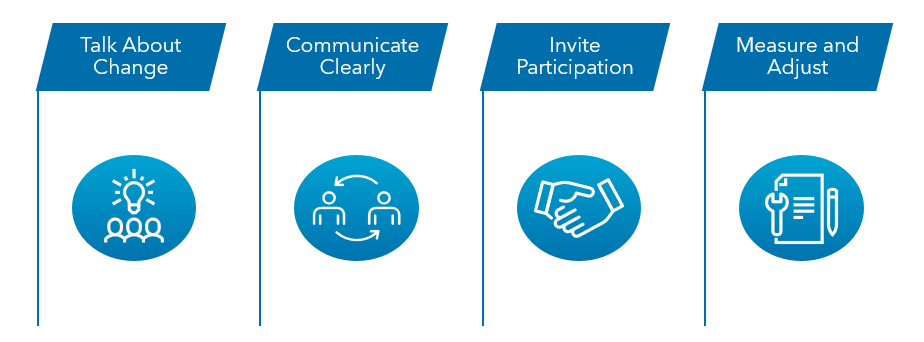
Talk About Change (Before It’s Time To Actually Change)
Culture shifts start with daily conversations. Begin talking about the value of making consistent improvements before a major initiative is on the horizon. When change is part of regular dialogue, it feels less like a disruption and more like progress.
Replace your own thoughts of “that’s how we’ve always done it” with “what’s the best way to do this now?” Then, make that mindset visible; if you can model openness, your team will be more equipped to follow.
Create space for ideas to surface. Make it easy for employees to make suggestions, and make a practice of acting on them quickly. Even small actions can show that input and new ideas matter.
Finally, recognize effort in addition to results. When someone tries a new approach, acknowledge it. Celebrating experiments builds confidence and makes adaptability part of your culture.
Start with one conversation this week, and build from there. Progress comes from consistency, not a single statement.
Communicate Clearly
When it comes to introducing specific change initiatives, clear communication is important.
Your team needs more than an announcement. They need the information that answers their biggest questions: “What’s happening?” “Why now?” “How will it affect me?”
Anticipate these kinds of questions before they’re ever asked. Proactively explain how the change impacts roles and workflows, and share the benefits for your company as a whole. When employees know the “why” and the “how,” they’re more likely to effectively apply the “what.”
Choose communication methods that work for your organization and stick with them. Whether it’s email, meetings or another dedicated channel, communicating in a consistent way prevents confusion.
Keep the conversation open, and ask for feedback. Transparency is more than simply informing. It’s about building trust.
Invite Participation
Change sticks when people feel that they have a voice in it. Instead of rolling out an initiative and hoping for buy-in, involve your team early. Ask for input before decisions are finalized so employees are bought into the improvements and their results.
Invite ideas from every level of the organization—not just your leadership team. Some of the most helpful viewpoints can come from those who are the closest to the work. When your team can see that their suggestions are shaping real improvements, employee engagement and organizational adaptability grow.
Make participation easy. Use surveys, run test groups and encourage new ideas. This shows your team that input matters, and it can spotlight adaptability issues before they become roadblocks.
Collaboration strengthens change and makes it easier to put into practice. When your team helps shape the process, adoption becomes a shared effort instead of a top-down directive.
Measure and Adjust
What works for your organization? How do you know?
Change readiness shouldn’t be a gut feeling. It should be informed by real and current numbers. Instead of relying on trial and error (or abandoning initiatives when they hit a snag), start by actually measuring how ready your organization is for change.
Tracking measurable indicators gives you an accurate picture of where your organization stands and what needs attention. You can measure change readiness in several ways:
- Use a short survey with a 1–5 scale asking employees: How confident are you in adapting to new processes? Average the responses for a baseline score, and reassess periodically to see adaptability trends over time.
- Review how many employees complete training for a new initiative within the required timeframe.
- Record the number of improvement or innovation ideas submitted per quarter. A higher number indicates more openness to change.
- Measure how long it takes for teams to fully implement a new process or tool after rollout. Track how many employees can follow the new process or use the tool correctly within the first 30 days.
- Monitor engagement with change-related communications (e.g., email open rates, intranet clicks). Low engagement could signal gaps.
- Monitor turnover during major transitions. Spikes may indicate cultural resistance or poor support.
Once you know the gaps, adjust your strategy based on the numbers. When you can measure your organization’s change readiness, you can target improvements where they matter most and increase the likelihood of success.
Is Your Organization Ready for Change?
Change isn’t slowing down, and readiness determines how well your business navigates what’s next.
If you have questions about change-readiness and how your business can measure and implement this concept within your organization, connect with your Warren Averett advisor or ask a member of our team to reach out to you.

This article was originally published on October 28, 2020 and most recently updated on November 19 2025.