
IRS Announces Tax Relief in Areas Impacted by Hurricane Debby
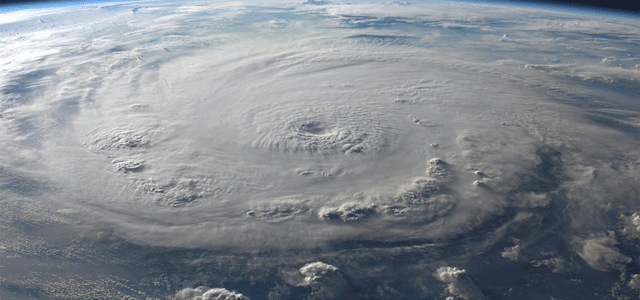
The IRS recently announced tax relief for 61 of 67 counties in Florida (as well as others in Georgia, South Carolina and North Carolina) due to the devastation brought about by Hurricane Debby. The disaster declaration issued by FEMA allows the IRS to postpone certain filing and payment deadlines starting August 1, 2024, to a new deadline of February 3, 2025, for federal returns only. This extension does not automatically include state returns.
This relief extends the October 15, 2024, individual and corporate 2023 tax return extended deadline to February 3, 2025, as well as for calendar-year partnerships and S corporations with a 2023 extension ending September 16, 2024.
The IRS noted, however, that because tax payments related to these 2023 returns were due on April 15, 2024, those payments are not eligible for this relief.
Several other payment and return deadlines due in the coming months are also postponed until February 3, 2025.
Who qualifies for this tax relief?
This relief applies to residents (individuals and households) or those who have a business or tax preparer anywhere in the covered disaster area.
What does this mean for you and your business?
- Estimated tax payments that are originally due on September 15, 2024 (Voucher #3), and January 15, 2025 (Voucher #4), are also extended to February 3, 2025. We recommend adding the FEMA declaration number to your voucher.
- Affected individuals and businesses will have until February 3, 2025, to file returns and pay any taxes that were originally due during this period between August 1, 2024, and February 3, 2025. This includes 2023 individual income tax returns due on October 16, 2024.
In addition to the deadline extension, FEMA’s disaster declaration allows casualty losses (like property damages as a result of the storm) to be claimed for the year in which the disaster occurred or the prior year’s tax return. This delivers additional relief to individuals and business owners in the event that insurance does not cover all of the losses experienced due to the related disaster.
Please keep in mind that the IRS e-file system usually closes for maintenance around mid-November and does not reopen until late January. Warren Averett recommends getting everything filed prior to the e-file closure so that paper returns do not have to be mailed to the IRS.