
3 Strategies for Successful Physician Practice Management

Many physicians devote most of their time and energy to seeing patients, but to achieve long-term success, it’s important to carve out time to work on the actual management of your practice as well.
The inability to raise prices due to insurance payer limitations, high inflation rates and staffing challenges in a labor-intensive industry are creating a unique storm for physician practices. In today’s fast-moving healthcare landscape, simply providing quality patient care is no longer enough to ensure success.
Today’s challenges require intentional responses.
Physician Practice Management Strategies for Success
Here, we’ve outlined three physician practice management strategies that successful organizations use to navigate today’s dynamics.
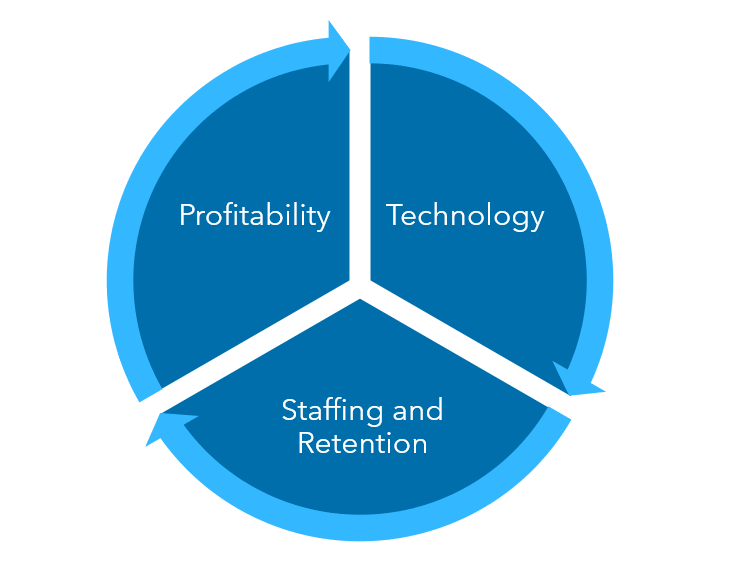
Establish a Clear Business Strategy and Growth Plan for Profitability
Create a comprehensive growth strategy that goes beyond day-to-day patient interactions. This involves identifying objectives, setting targets and outlining steps to achieve sustainable growth.
Since raising prices isn’t always possible, physician practices must look into other ways to increase revenue and remain profitable, like offering additional services or improving patient retention and loyalty.

Be proactive, adaptable and innovative to increase your practice’s bottom line. Pay attention to market dynamics and competition and be willing to implement change to best meet new challenges.
Efficiently managing expenses is also crucial to maintaining profitability. Regularly assess your financial statements to identify areas where costs can be reduced without compromising quality patient care.
Ultimately, some of the most profitable physician practices aren’t necessarily the ones that have the lower overhead: they’re the ones that know how to spend the dollars in the right places.
And remember, establishing a clear business strategy and growth plan is not just a one-time exercise but an ongoing process that requires attentiveness and strategic thinking.
Use Technology to Improve Efficiency and Protect Patient Data
Technology plays a pivotal role in modern medical practices, and it’s critical to invest in the right technology to streamline operations, enhance patient care and protect sensitive data.
Integrating your various technology systems, such as EMRs, billing software and communication tools, is essential to enhancing productivity and streamlining your physician practice management. Cohesive technology solutions for billing and reimbursement in particular can enhance processes and ensure timely and accurate payments.
But increased reliance on technology also increases your chances of being breached. Because medical practices handle sensitive patient information, they’re also a big target for cyber criminals, which means that it’s critical to invest in the proper cybersecurity measures that meet HIPAA requirements.
Coordinating security awareness training for your team members and fostering an internal culture of security awareness can turn your employees into your practice’s first line of defense against cyber attacks. Establish a proactive, comprehensive cybersecurity plan that includes risk reduction measures, written policies and proper cybersecurity insurance.
Having third-party cybersecurity assessments performed regularly also helps practices have a roadmap to stay up to date, identify priorities and leverage technology for better practice management.
Prioritize Strategic Staffing and Employee Retention
Physicians may only spend a few minutes with each patient; the rest of the patient’s interactions happen with the staff. So, having the right team in place is vital for providing excellent patient care, enhancing visitors’ experiences and maintaining customer satisfaction.
Staffing is an essential factor for successful physician practice management, but with the demand for healthcare professionals rising and the competitive job market, practices need to be creative in staffing and recruitment efforts.
Use benchmarking data to determine competitive pay rates for various positions in your practice and be sure that what you’re paying your team members is comparable to other practices.

Many of today’s employees are seeking remote work or flexible schedules, which isn’t always possible to offer in the healthcare industry. However, practices should be open to adapting where feasible to accommodate the changing needs and preferences of their staff.
For the best and brightest, you should also consider offering opportunities for career advancement, professional development and employee benefits. Practices that invest in their employees’ growth and well-being are more likely to retain staff and create a positive work environment.
Keeping the team you have is much easier and more cost effective than replacing them if they take other jobs, so be sure to implement an effective employee retention strategy designed to keep them engaged and feeling appreciated for their contributions to your practice.
The quality of your team directly impacts patient care and overall efficiency, so it’s important to prioritize your efforts toward staffing and employee retention for long-term success.
Learn More About Successful Physician Practice Management
Ongoing success in physician practice management requires strategic planning and a proactive approach to challenges.
If you’d like to learn more about how your unique physician practice can implement these strategies for success, reach out to your advisor directly, or ask a member of our team to reach out to you to get the conversation started.
This article was originally published on August 16, 2023 and most recently updated on October 9, 2025.