
A Quick Guide To Integrating Retirement Plans in Mergers and Acquisitions

Retirement plans play a vital role in attracting and retaining talent, but they’re often overlooked in a business acquisition or merger. Integrating retirement plans can be complex, and missteps can lead to regulatory headaches, costly penalties and employee dissatisfaction.
Here are seven steps to approach retirement plan integration strategically so your organization can avoid common pitfalls, ensure a smooth transition, minimize risk and ensure compliance.
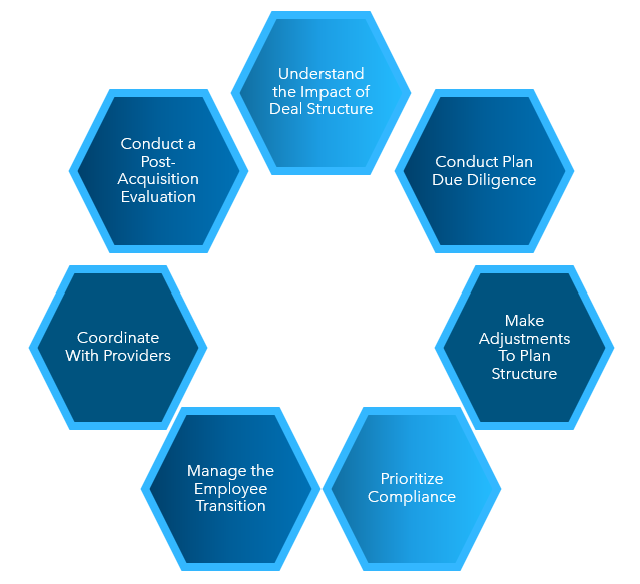
Understand the Impact of Deal Structure: Asset Sale vs. Equity Sale
The structure of the transaction (whether an asset sale or an equity sale) determines how you will integrate the retirement plans or establish a new plan.
In an asset sale, the seller typically retains ownership and responsibility for the existing retirement plan, while the buyer establishes a new plan or uses an existing plan for the acquired employees.
In an equity sale, the seller transfers ownership of the entity and its retirement plan to the buyer. The acquiring company must decide whether to maintain the plan as a separate entity, merge it into an existing plan or terminate it entirely.
Each deal structure triggers different compliance and administrative requirements, so it’s critical to consult an advisor about your specific situation.
Conduct Thorough Retirement Plan Due Diligence
Before finalizing the transaction, review the plan documents, summary plan description, prior Form 5500 filings and other compliance data.
Pay particular attention to unfunded liabilities and other long-term obligations because these can materially affect the purchase price and overall integration strategy. In an equity sale, unfunded liabilities, as well as any past compliance issues, carry over to the purchaser of the entity and remain for as long as the plan is in place.
Analyze plan provisions, including eligibility, vesting and contribution formulas and review prior non-discrimination testing results. This review can identify potential compliance issues or operational defects that may pose fiduciary or financial risks after closing.
Make Necessary Adjustments To Plan Structure and Governance
Once you complete due diligence, develop a clear post-acquisition strategy for managing the retirement plans.
Depending on the structure and findings, this may involve merging the seller’s plan into the buyer’s existing plan, terminating the seller’s plan or maintaining it as a stand-alone arrangement. Each approach requires careful coordination to ensure compliance with ERISA, the Internal Revenue Code and applicable Department of Labor regulations.
Update and finalize plan documents to clearly outline the terms, conditions and administrative procedures. Define fiduciary responsibilities on both the buyer and seller side to avoid gaps in oversight during the transition period.
Prioritize Regulatory Compliance
Maintaining compliance with IRS and DOL regulations is critical during plan integration.
With the help of legal counsel and your HR or benefits team, review all plan documents, amendments and administrative procedures to ensure they align with current standards.
Evaluate fiduciary practices to determine whether they comply with ERISA requirements and address any deficiencies before or immediately after the transaction closes. Identify any ERISA-reportable events, such as plan terminations, significant operational failures or changes in plan sponsors, as these may trigger disclosure requirements or corrective actions.
Missing disclosure deadlines or failing to correct plan errors can lead to penalties, disqualification or reputational harm.
Manage the Employee Transition
Employers must provide timely, transparent information about any changes to retirement benefits, including how the plan sponsor will handle existing balances and how employees can enroll in the new or modified plan.
Provide educational resources and enrollment assistance to help employees understand contribution options, investment choices and plan features. Proactive communication is part of complying with ERISA notice requirements, but, perhaps more importantly, it supports employee morale and minimizes confusion during the transition.
Coordinate With Plan Providers
It’s important to collaborate with the right service providers for help designing, administering and maintaining a compliant retirement plan post-transaction. Your providers play a big part in ensuring accurate data migration, plan document updates, participant communications and regulatory filings.
The buyer and seller should work closely with their respective third-party administrators, recordkeepers and counsel to evaluate integration options and execute the strategy.
Confirm your provider has experience with plan conversions and mergers. They may need specialized expertise to manage complex integration scenarios without introducing new compliance risks.
Conduct a Post-Acquisition Evaluation
Once the integration is complete, conduct a formal post-acquisition review to assess the effectiveness of the retirement plan transition. Verify that you’ve met all regulatory requirements, that plan documents and operations align with the intended design and that you’ve accurately transferred all participant records.
This evaluation also provides an opportunity to identify and resolve any lingering administrative or compliance issues. Engaging internal stakeholders and external advisors in this review helps ensure long-term plan integrity and reduces the risk of future corrective actions.
Finish Strong
Retirement plan integration during a business acquisition is complex, but with careful planning and execution, the process goes a lot smoother. From structuring the deal to communicating with employees, pay attention to details along the way and leverage the expertise of third-party administrators, investment advisors, auditors and other professionals who can help protect the organization from making costly errors.
Reach out to a Warren Averett advisor for help integrating your retirement plan with care. We have the expertise and experience to guide you through every phase of the process.