
The High Cost of Complacency: The Real-World Consequences of Outdated IT

Many small and medium-sized business (SMB) owners view IT upgrades as unnecessary expenses, delaying technology improvements until the current setup finally breaks beyond repair. While this mindset may seem financially prudent, it’s a dangerous way to approach outdated IT systems.
Outdated systems don’t save money. Instead, they act as ticking financial and operational time bombs, quietly increasing your risk while undermining your competitive position.
“Outdated IT” refers to end-of-life hardware that manufacturers no longer support, unpatched operating systems running known vulnerabilities, legacy software that can’t integrate with modern tools and the lack of basic security measures like multi-factor authentication (MFA). If you’re still running Windows 10 (or an even earlier version), using hardware that’s five-plus years old or haven’t updated your systems in months, you are placing your business at serious risk.
The consequences of delayed IT maintenance—from cybersecurity incidents to compliance failures—are far greater than the cost of being proactive and modernizing. In fact, these consequences can threaten the very survival of your business.
These are the four greatest consequences of outdated IT.
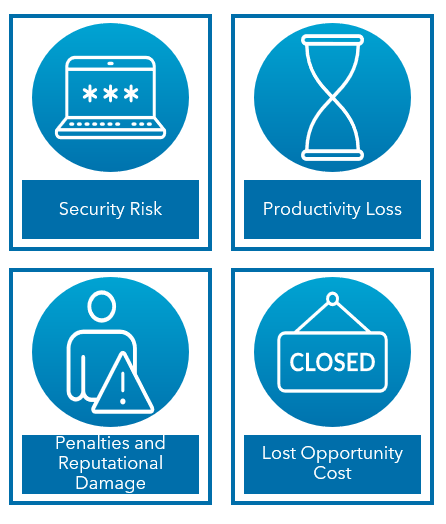
1. The Catastrophic Security Risk (The Top Threat)
When you allow your systems to remain unpatched, you’re essentially leaving your IT infrastructure exposed. Unpatched software and operating systems contain known vulnerabilities that cybercriminals actively target through automated tools that scan the internet looking for these weaknesses.
Unpatched software is a very common entry point for ransomware attacks. Outdated versions of common software (like Windows, older WordPress installations or legacy versions of business applications) routinely appear in published vulnerability databases, so cybercriminals don’t necessarily need sophisticated skills to exploit these weaknesses. They just need to know where to look.
A successful ransomware attack can lead to a complete operational shutdown. Critical data assets like financial records and customer data will become completely inaccessible. Your employees will be unable to work without the ability to access the info they need to perform their jobs. There is also the added costs of the lost revenue during the downtime, the recovery efforts and potential legal costs after a ransomware attack, as well as the negative impact it will have on your SMB’s reputation.
Modern cyberattacks use AI-driven phishing campaigns and zero-day exploits that legacy security tools simply weren’t designed to detect or prevent. Many SMBs are still relying on outdated firewalls and signature-based antivirus protection that cannot recognize new threat patterns.
2. Operational Paralysis and Productivity Loss
Older hardware fails more frequently. Hard drives crash, servers malfunction and aging components simply give out and can cause unplanned downtime in multiple ways. The result can be lost sales, unbillable employee time and emergency repair costs that contribute to the ultimate cost of the downtime.
Slow, aging computers and networks frustrate employees and slow down core work tasks. This kind of productivity drag can compound over time. For example, consider employees who must wait five minutes each day for an aging computer to boot up, another few minutes for programs to load and additional time for files to save or transfer. Multiply those minutes across every employee, every day, for an entire year and there are hundreds of lost productivity hours. Additionally, the employees can lose focus waiting for systems to respond or develop workarounds that introduce errors.
New versions of modern business applications, such as accounting software, CRM platforms and collaboration tools, are released frequently. Many stop supporting older operating systems entirely. When your infrastructure can’t run current software versions, you’re forced into manual interventions that increase error rates and prevent you from accessing essential features that your competitors use every day, such as cloud-based solutions that could transform your operations.
3. Penalties and Reputational Damage
Outdated systems frequently fail to meet modern data privacy regulations. You can be subject to the General Data Protection Regulation, or GDPR, if you have European customers or the Health Insurance Portability and Accountability Act, or HIPAA, if you handle health information. If you handle credit card information, you have to adhere to the Payment Card Industry Data Security Standard, or PCI DSS.
If your organization is not compliant with the specific security standards it is required to meet, it risks substantial fines. For SMBs with limited resources, these penalties can be business-ending events. Even if you avoid maximum penalties, the cost of remediation and legal defense can cripple your finances, and you can be subject to audits and regulatory scrutiny that can paralyze your operations for months.
When customer and/or employee data is compromised because your systems weren’t adequately protected, the reputational damage can be devastating. Customers who trusted you with their information will move to competitors who appear more secure. The customers you lose may never return, and the prospects who research your company before engaging will find the breach in their due diligence.
Your outdated systems can also void your cyber insurance policy. Many cyber insurers now require basic security measures like MFA and patched systems as conditions of coverage. If you suffer a cybersecurity incident and your insurer determines you weren’t maintaining these fundamental protections, they may refuse your claim entirely. You can be left covering the entire cost of the breach, recovery, notification and legal defense from company resources with no insurance support.
4. The Lost Opportunity Cost
You might be running on outdated IT, but your competitors might not be. Advanced technology tools could allow them to move faster, serve customers better and operate more efficiently. They may even offer better prices because their operational costs are lower, and they may respond to customer inquiries faster because their systems are integrated. If you delay modernizing your IT systems, you can fall further behind your competitors.
Modern workers also expect efficient, functional tools. When talented employees struggle with outdated, frustrating technology, it becomes a factor in their decision to seek opportunities elsewhere. The costs of the recruitment, training, lost productivity during the transition, etc., exceeds the cost of updating your IT infrastructure.
Legacy systems are often rigid and cannot scale to accommodate business growth. This means you lack the IT to support strategic opportunities. For example, launching an e-commerce channel is impossible because your current infrastructure can’t support it. You could also be unable to accommodate a surge in remote employees because your systems weren’t designed to handle the load.
Learn More About the Risks of Outdated Technology
The cost of proactive IT maintenance, such as regular updates, timely patches and strategic hardware replacement, is significantly lower than emergency recovery from a security incident, compliance violation or system failure. SMBs should stop treating IT as a cost center and start recognizing it as a fundamental for business resilience and competitive advantage.
To get started, it’s important to understand exactly where you’re vulnerable. With clear visibility into your risks, you can prioritize investments strategically rather than waiting for a crisis to force your hand. Connect with an experienced Warren Averett Technology Group advisor today to assess your current IT infrastructure and develop a practical modernization roadmap.
