
The Quiet Decisions That Can Shape a Manufacturing Company’s Tax Plan

For manufacturers, some of the most influential business decisions happen quietly behind the scenes, and tax planning is no exception. Some of the most important financial choices aren’t flashy, and they’re rarely urgent. But they can shape how your company operates, grows and prepares for the future.
In this article, we highlight a handful of tax-related considerations that often go unnoticed within the manufacturing industry. But, these aren’t loopholes or quick wins. They’re critical decisions and opportunities that deserve more attention than they typically get.
Cash Method of Accounting
Manufacturing companies with less than approximately $30 million in annual gross receipts may qualify to use the cash method of accounting instead of the accrual method of accounting, which can offer a practical timing advantage.
Under the cash method of accounting:
- You report income only when you receive payment, not when you issue an invoice.
- You deduct expenses only when you pay them, not when they’re recorded.
While this means you can’t deduct unpaid expenses right away, the overall effect of using the cash method of accounting is often a deferral of taxable income, which can help align your tax obligations more closely with your actual cash flow.
For manufacturers in this revenue range, it’s worth evaluating whether this method better supports your financial strategy.
LIFO Inventory Method
The Last-In, First-Out (LIFO) inventory method is another area manufacturers should consider in tax planning.
While the annual impact may seem modest at first glance, LIFO can serve as a valuable long-term deferral tool, especially in the manufacturing industry, where prices tend to rise over time.
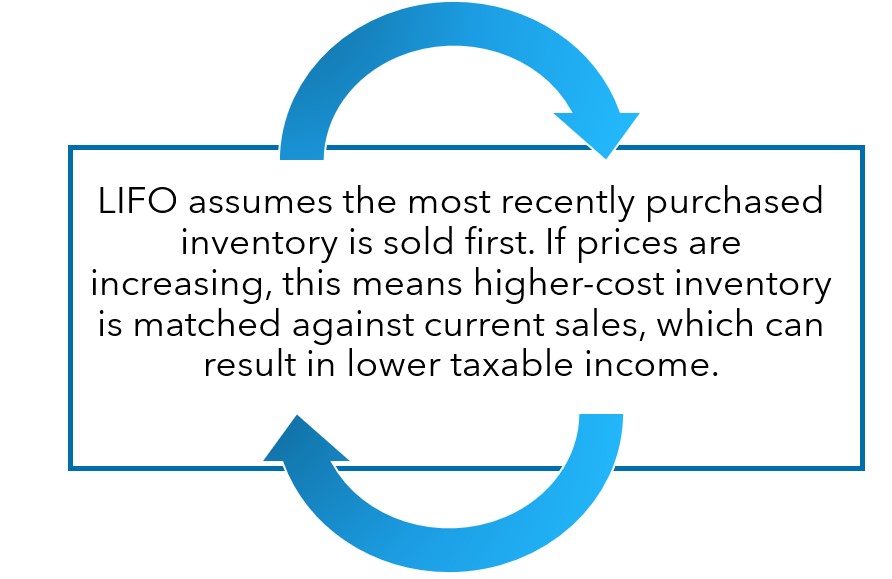
LIFO assumes the most recently purchased inventory is sold first. If prices are increasing, this means higher-cost inventory is matched against current sales, which can result in lower taxable income.
Over a span of 20 to 30 years, using LIFO can create a substantial difference between the value of inventory reported for tax purposes and its actual cost, which is known as the LIFO reserve. This reserve builds gradually as prices rise, and it reflects the cumulative impact of consistently applying the LIFO method over time.
Manufacturers should assess whether this method aligns with your company’s long-term financial strategy and goals.
Tax Credits and Incentives
Several tax credits are available to manufacturers, and many are often misunderstood or underutilized.
Work Opportunity Tax Credit
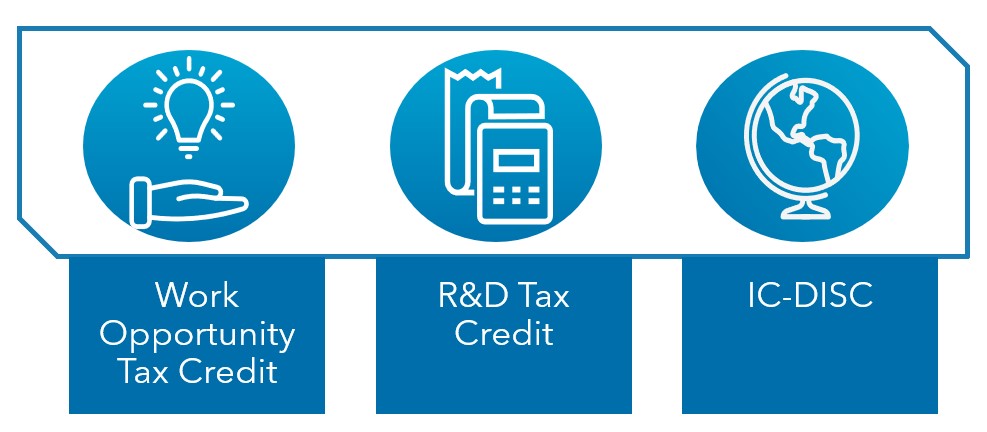
The Work Opportunity Tax Credit (WOTC) is available to companies that hire individuals from certain groups that face barriers to employment, such as veterans or long-term unemployed workers. If eligible, your company can claim a tax credit based on a portion of that employee’s wages.
Many manufacturers already qualify without changing their hiring practices, yet this credit is often overlooked. If your team is growing or hiring regularly, it’s worth checking whether you’re capturing this opportunity.
The WOTC is set to expire on December 31, 2025. There are currently several bills that include an extension, but they have not passed as of the publishing of this article.
R&D Tax Credit
The Research & Development (R&D) Tax Credit has been around for years, but it’s often misunderstood. Many assume it only applies to scientific research or product development in a lab setting. In reality, the tax code defines R&D much more broadly. For example, a distributor that developed proprietary packaging can qualify for the credit.
If your company is improving processes, designing new packaging or developing proprietary tools, it’s worth exploring whether those efforts qualify. You might already be doing R&D without realizing it.
IC-DISC
For manufacturers that export goods, the Interest Charge Domestic International Sales Corporation (IC-DISC) can be a useful structure to explore. It’s designed to support U.S. companies that sell products abroad by offering a way to treat a portion of export income more favorably for tax purposes.
While it’s a specialized option and not every manufacturer will qualify, those with consistent export activity may benefit from reviewing whether an IC-DISC aligns with their business model and long-term goals.
Site Selection Incentives
Manufacturers exploring expansion should be aware of the local, county and state tax incentives tied to site selection.
These programs often offer tangible benefits (such as credits on utility bills or Opportunity Zone tax incentives) simply for relocating or growing operations in designated areas.
While manufacturers may not move heavy equipment often due to logistical constraints, expanding into a new facility or adding a location can open the door to these incentives. Evaluating them early in the tax planning process can reveal operational efficiencies and cost advantages that support long-term growth.
In addition, manufacturers can benefit from new tax incentives like qualified production property and bonus depreciation when adding new facilities.
Learn More about Tax Planning for Manufacturers
Staying curious, asking informed questions and revisiting long-standing assumptions can lead to smarter tax planning. The more manufacturers engage with the details of their tax position (not just the obvious factors), the more confidently they can navigate decisions that affect their financial futures.
To learn more about tax planning for your manufacturing company, connect with your Warren Averett advisor directly, or ask a member of our team to reach out to you.
